This article contains affiliate links. If you buy through them we may earn a commission at no extra cost to you. Prices come from Amazon and change constantly — always check current pricing.
Building your first HF station feels bigger than it is. Strip away the forum debates and it comes down to five pieces: a radio, an antenna, a way to feed it, power, and a license. Get those right, in that order of importance, and you’ll be working the world. This is the complete shopping list, with an honest budget and a link to the detailed buying guide for each piece.
The whole station at a glance
| Piece | Budget option | Better option | Guide |
|---|---|---|---|
| Radio | Xiegu G90 (~$465) | Icom IC-7300 (~$1,200) | Radios → |
| Antenna | Homemade dipole (~$40) | JPC-12 / CHA-250B | Antennas → |
| Feedline | RG-8X coax | LMR-400 for long runs | below |
| Power | 25–30A supply | — | below |
| Tuner | Built-in ATU | LDG auto tuner | Tuners → |
Total: roughly $600 budget to $1,500 for a comfortable first station.
1. The radio (start here)
Your radio is the heart of the station, but you don’t need the most expensive one. A 100W HF/6m radio like the Icom IC-7300 is the mainstream first choice for its receiver and spectrum scope; the Xiegu G90 gets you on HF for a third of the price with a built-in tuner; the compact Yaesu FT-891 does double duty at home and in the field.
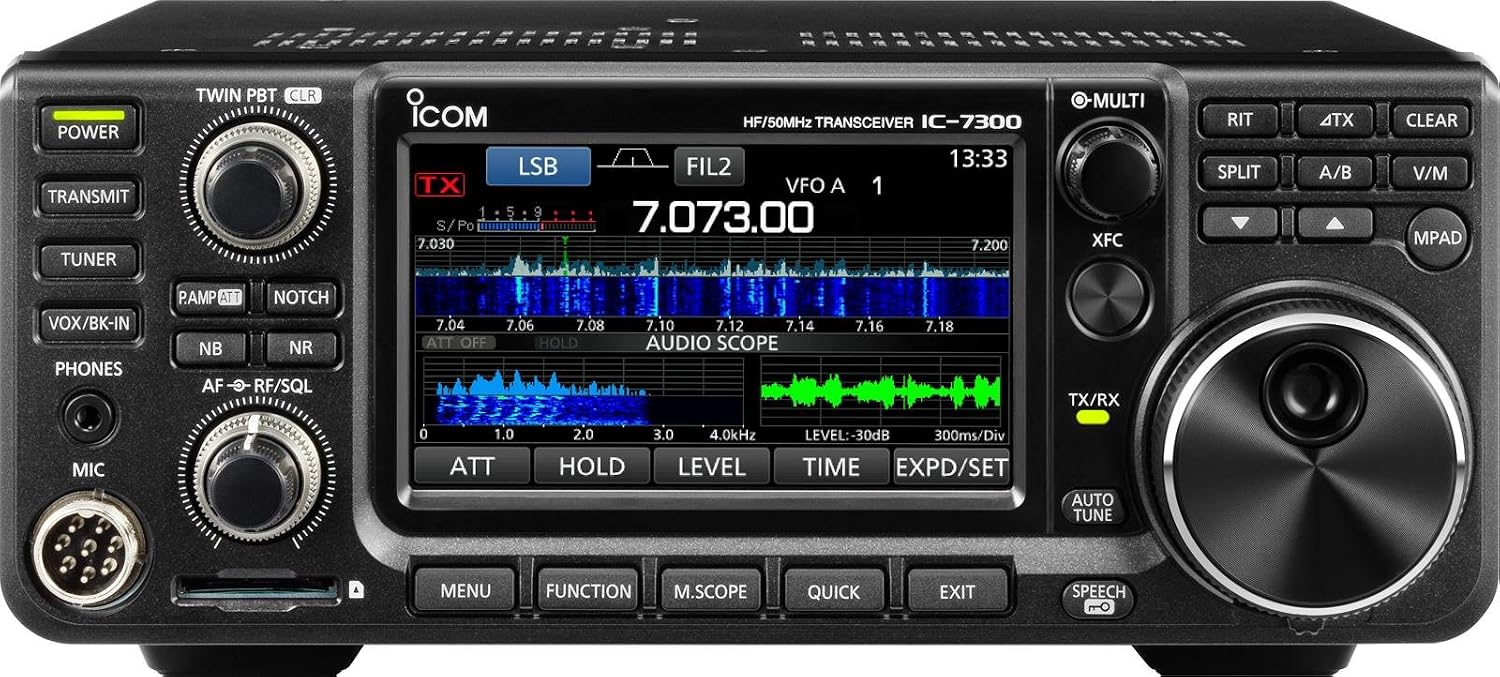
The mainstream first radio
Icom IC-7300
100W HF/6m with a waterfall scope that teaches you to read the bands — the reference first "real" HF radio.
Check price on AmazonFull comparison in our best HF radio for beginners guide.
2. The antenna (matters most)
Here’s the secret veterans wish they’d learned sooner: the antenna matters more than the radio. A modest radio into a good antenna beats an expensive rig into a compromise. If you have space and two supports, build a wire dipole or end-fed half-wave for well under $70 — it’s the best performance per dollar in the hobby. If space is tight or you’re under an HOA, a no-radial vertical or a portable vertical like the JPC-12 gets you on the air.
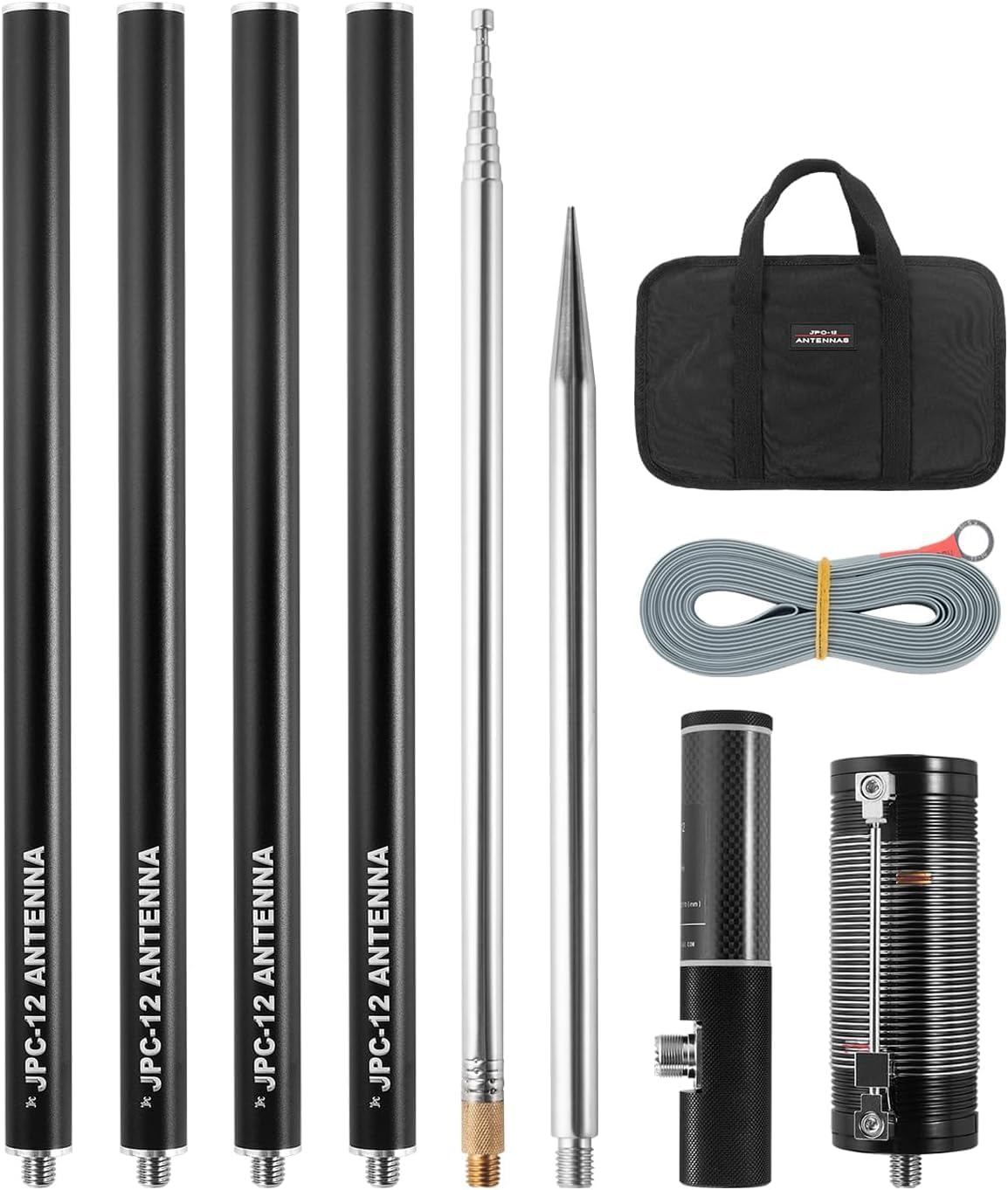
Easy home-and-field vertical
JPC-12 HF Vertical
40m–6m portable vertical that works at home or in a park — a forgiving first antenna when a wire won't fit.
Check price on AmazonMore options in our beginner antenna guide and antenna-type comparison.
3. Feedline (coax)
Connect the radio to the antenna with 50-ohm coax. For short runs under about 50 feet, RG-8X is light and inexpensive; for longer runs or UHF, step up to low-loss LMR-400 to avoid losing signal in the cable. Use quality PL-259 connectors and weatherproof any outdoor joints. Don’t cheap out here — a lossy feedline quietly steals the signal your antenna worked hard to make.
4. Power
At home, a 100W radio needs a 25–30A regulated 13.8V power supply. Switch-mode supplies are light and cheap; linear supplies are heavier but quieter on the bands. Wire the radio with the supplied fused leads. For portable operation you’ll want a LiFePO4 battery instead — see our field battery guide.
5. The tuner (maybe)
If your antenna is resonant on the bands you use, you may not need a tuner. If you run a multiband wire or a compromise antenna, an automatic antenna tuner matches it so your radio delivers full power — see our antenna tuner guide. Some radios, like the Xiegu G90, include a built-in tuner that covers most needs.
Nice-to-have extras
Once the station works, an antenna analyzer makes tuning painless, an SDR receiver lets you watch propagation on a waterfall, and a good pair of headphones and a paddle or key round things out.
Put it together and get on the air
Assemble the five pieces, get your General license, and start listening. Check today’s band conditions to find an open band, tune around, and make that first contact — it’s a feeling you don’t forget. New to how the bands behave? Start with our propagation for beginners guide.
Frequently Asked Questions
What do I need for my first HF station?
Five things: an HF radio, an antenna, a way to feed it (coax), a power supply, and a license. A workable first station is an entry HF radio like the Icom IC-7300 or Xiegu G90, a wire or vertical antenna, 50-ohm coax, a 25–30A power supply for home use, and an antenna tuner if your antenna isn’t resonant. Budget roughly $600–1,500 for a solid first HF setup depending on the radio you choose.
How much does it cost to get started on HF?
You can get on HF for around $600 with a budget radio like the Xiegu G90 and a homemade wire antenna, or spend $1,200–1,500 for an IC-7300-class station with a commercial antenna and power supply. The antenna and feedline matter more than a premium radio, so a mid-priced radio into a good antenna is the smart first build. Add the license exam fee, which is minimal.
What license do I need to operate HF?
In the US, HF privileges start with the General class license, which opens most of the HF bands. The entry-level Technician license grants limited HF privileges, mainly on 10m plus small CW segments. Most operators study for General to get full HF access — it’s a multiple-choice exam, and free study material is widely available. Get licensed before you transmit.
Do I need an antenna tuner for my first station?
Only if your antenna isn’t resonant on the bands you use. A radio with a built-in tuner like the Xiegu G90 plus a near-resonant antenna may not need an external tuner at all. If you run a multiband wire or a compromise antenna, an external automatic tuner makes life easy. Start with a resonant antenna if you can, and add a tuner when you need multiband flexibility.
Should I buy a base radio or a portable one first?
If you’ll operate mostly from home, a base radio like the IC-7300 gives you more receiver and 100W for the money. If you want to operate from parks and summits, a portable rig like the IC-705 or a compact FT-891 does double duty. Many hams start with a compact 100W radio like the FT-891 precisely because it works well at home and in the field.