This article contains affiliate links. If you buy through them we may earn a commission at no extra cost to you. Prices and ratings come from Amazon and change constantly.
Portable operating lives and dies on power. Bring too little and you’re packing up mid-run; bring too much and you’re hauling a brick up a trail. The right battery is the one sized to your radio and your day, and for ham radio that almost always means LiFePO4 — light, safe, and rock-steady at 12 volts. Here are three picks for three field profiles, plus the simple math to size your own.
Quick Picks
| Need | Battery | ~Price | Why |
|---|---|---|---|
| 🥇 Best all-round (100W) | Bioenno 12Ah LiFePO4 | ~$136 | The POTA/field standard |
| 🎒 Best compact (QRP) | Talentcell 12V 6Ah | ~$34 | Tiny and light for SOTA |
| 💸 Best budget capacity | Miady 12V 15Ah LiFePO4 | check | Most amp-hours per dollar |
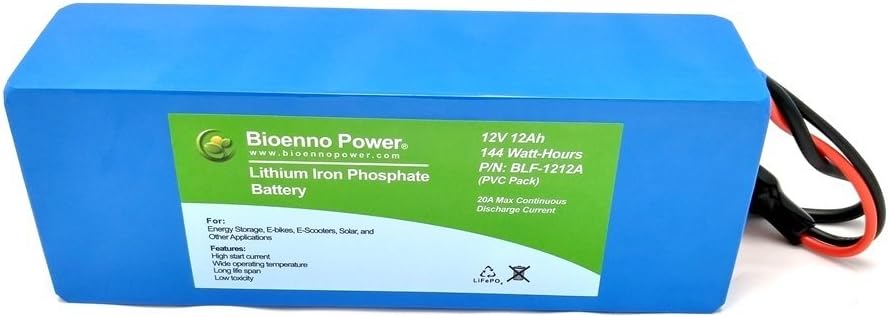
🥇 Best All-Round (100W)
Bioenno BLF-1212A 12Ah
The battery you see on more POTA tables than any other. 12Ah of clean LiFePO4 power runs a 100W radio for a solid session and a QRP rig all day, with a built-in BMS and a trusted name behind it.
- 12V 12Ah
- LiFePO4 + BMS
- ~3.5 lb
Amazon: 4.6/5 from 48 reviews. Add a LiFePO4 charger and Powerpoles.
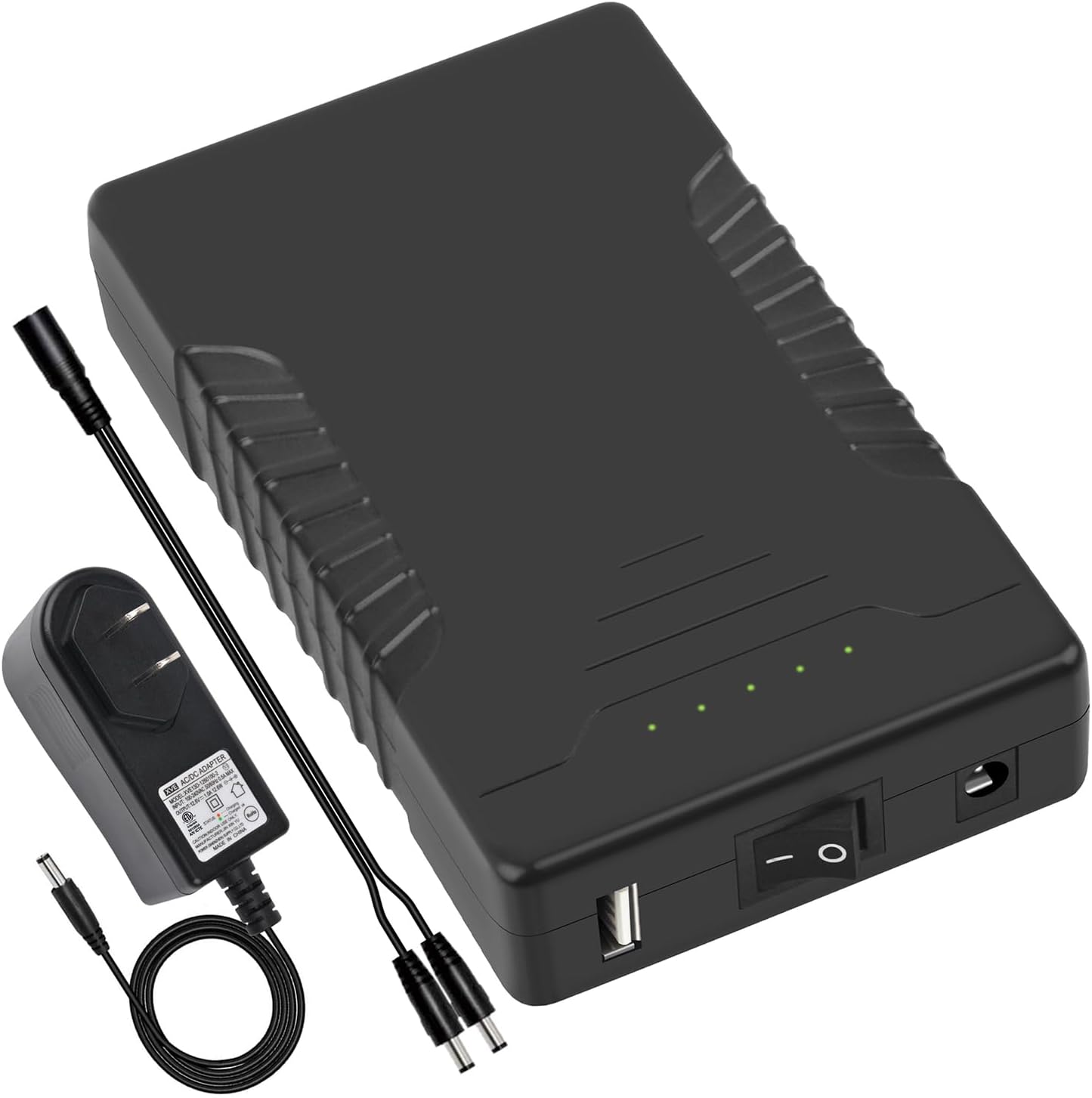
🎒 Best Compact (QRP)
Talentcell 12V 6Ah
Pocket-sized power for QRP and SOTA. A few amp-hours in a light, cheap package that runs a 5–10W radio for hours. Lithium-ion rather than LiFePO4, so keep it to low-power rigs.
- 12V ~6Ah
- Li-ion
- Ultralight
Amazon: 4.7/5 from 4,600 reviews. Perfect for a (tr)uSDX or IC-705.
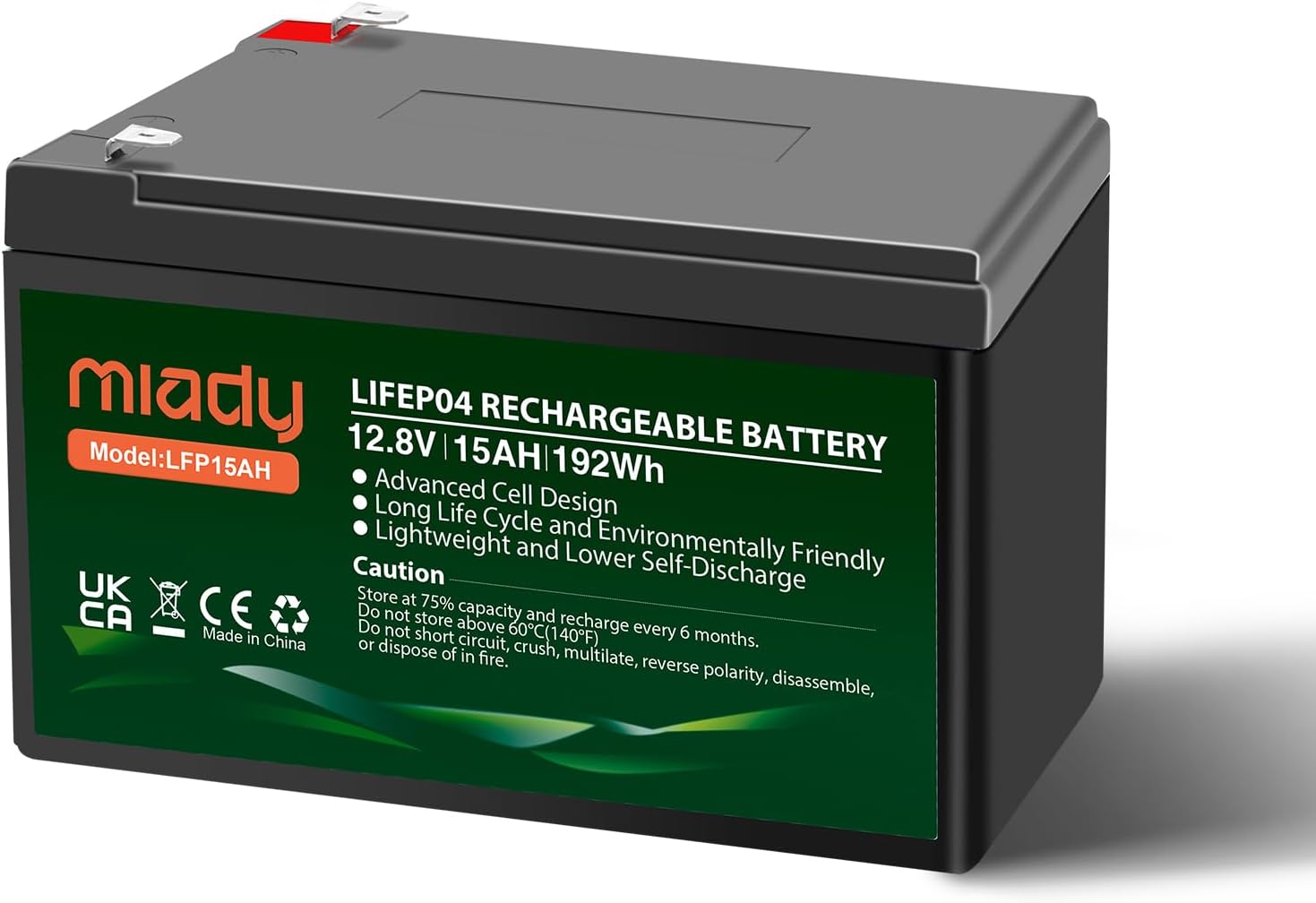
💸 Best Budget Capacity
Miady 12V 15Ah LiFePO4
When you want the most amp-hours per dollar for long 100W field days. 15Ah of LiFePO4 with a BMS, at a budget price — heavier than the Bioenno but with more runtime.
- 12V 15Ah
- LiFePO4 + BMS
- Budget
Amazon: 4.7/5 from 48 reviews. Confirm dimensions fit your pack.
Sizing your battery: the simple math
Runtime in hours is roughly battery amp-hours ÷ average current draw. The trick is estimating average draw:
- QRP radio (5–10W): ~1–2A average. A 6Ah Talentcell runs it for most of a day.
- 100W radio, SSB: ~4–8A average with voice peaks near 20A. A 12Ah Bioenno covers a typical activation; 15–20Ah for a long day.
- 100W radio, FT8: higher duty cycle means higher average draw — size up, or run reduced power.
Match the battery to the radio you’ll actually bring. If you’re still choosing, see our best portable HF radio for POTA and SOTA guide — QRP rigs let you carry a much smaller battery.
Pro Tip: Skip the napkin math — the POTA power budget calculator computes average draw, required Ah with margin, and runtime from your exact radio, mode, and activation length, using manufacturer current-drain specs. It also checks today’s band conditions to tell you when QRP (and a much smaller pack) will do the job.
The rest of a field power kit
You’ll want a LiFePO4-specific charger, Anderson Powerpole connectors so everything interconnects, and optionally a small solar panel to top off on long days. Fuse your power leads. And check today’s conditions before you hike — a dead band is no fun even with a full battery.
Who should skip these
If you only operate from home on mains power, you don’t need a field battery at all — though a small LiFePO4 pack makes a great emergency backup when the grid goes down. And if you’re running a 100W radio hard for a full multi-day event, a single 12Ah pack won’t cut it; plan for 20–30Ah or multiple batteries.
Frequently Asked Questions
What size LiFePO4 battery do I need for POTA?
For a QRP radio at 5–10W, a 6Ah battery easily covers a multi-hour activation. For a 100W radio like the FT-891, plan on 12–20Ah for a full day, because transmit current can hit 20A on SSB peaks. A 12Ah LiFePO4 like the Bioenno is the popular all-round choice; step up to 20Ah for long 100W field days or running FT8 duty cycles.
Why LiFePO4 instead of a regular lithium or lead-acid battery?
LiFePO4 (lithium iron phosphate) holds a stable ~13.2V under load, is far lighter than lead-acid, survives thousands of charge cycles, and is much safer than standard lithium-ion chemistries. For ham radio the flat voltage curve matters — your radio sees clean 12V power right up until the battery is nearly empty, unlike lead-acid which sags.
How long will a 12Ah battery run my radio?
Roughly: runtime in hours ≈ battery amp-hours ÷ average current draw. A 100W radio averages maybe 4–8A across receive and SSB transmit, so a 12Ah pack gives about 1.5–3 hours of hard operating, or much longer if you mostly receive. A 10W QRP radio might draw under 2A, stretching a 12Ah pack across a whole day. FT8’s high transmit duty cycle drains faster than SSB.
Can I use a Talentcell battery for QRP radios?
Yes — the Talentcell 12V packs are a popular, inexpensive choice for QRP rigs drawing a few amps. They’re compact and light for SOTA and casual POTA. Just note they’re lithium-ion, not LiFePO4, so they output a slightly higher nominal voltage and have fewer charge cycles than a LiFePO4 pack. For a 100W radio, use a proper LiFePO4 like the Bioenno instead.
How do I charge a LiFePO4 battery safely?
Use a charger designed for LiFePO4 chemistry — its charge voltage differs from lead-acid and standard lithium. Most quality LiFePO4 packs include a built-in battery management system that protects against over-charge, over-discharge, and short circuits. Don’t use a lead-acid car charger, which can over-volt a LiFePO4 pack. Many operators charge in the field from a small solar panel.