This article contains affiliate links. If you buy through them we may earn a commission at no extra cost to you. We only recommend gear we’d carry to a park ourselves, and we never fake test results — prices and ratings are pulled live from Amazon and change constantly.
Portable HF is where propagation gets personal: a wire in a tree, a battery, ten watts, and whatever the ionosphere hands you that afternoon. The “best” POTA or SOTA radio depends entirely on how you operate — how far you hike, how much you’ll spend, and whether you live on CW, FT8, or SSB. This guide ranks four rigs for four honest field situations, and every pick is tied to what the bands are actually doing. Check today’s band conditions before you pack — the radio only matters if a band is open.
Quick Picks
| Need | Radio | ~Price | Why |
|---|---|---|---|
| 🥇 Best all-mode portable | Icom IC-705 | ~$1,610 | HF/VHF/UHF QRP with scope, battery, GPS, D-STAR |
| 💸 Best value portable SDR | Xiegu X6100 | ~$565 | 10W HF SDR with built-in tuner + battery |
| 🎒 Ultralight / cheapest | (tr)uSDX 5-band | ~$123 | Pocket 5-band QRP for CW/SSB |
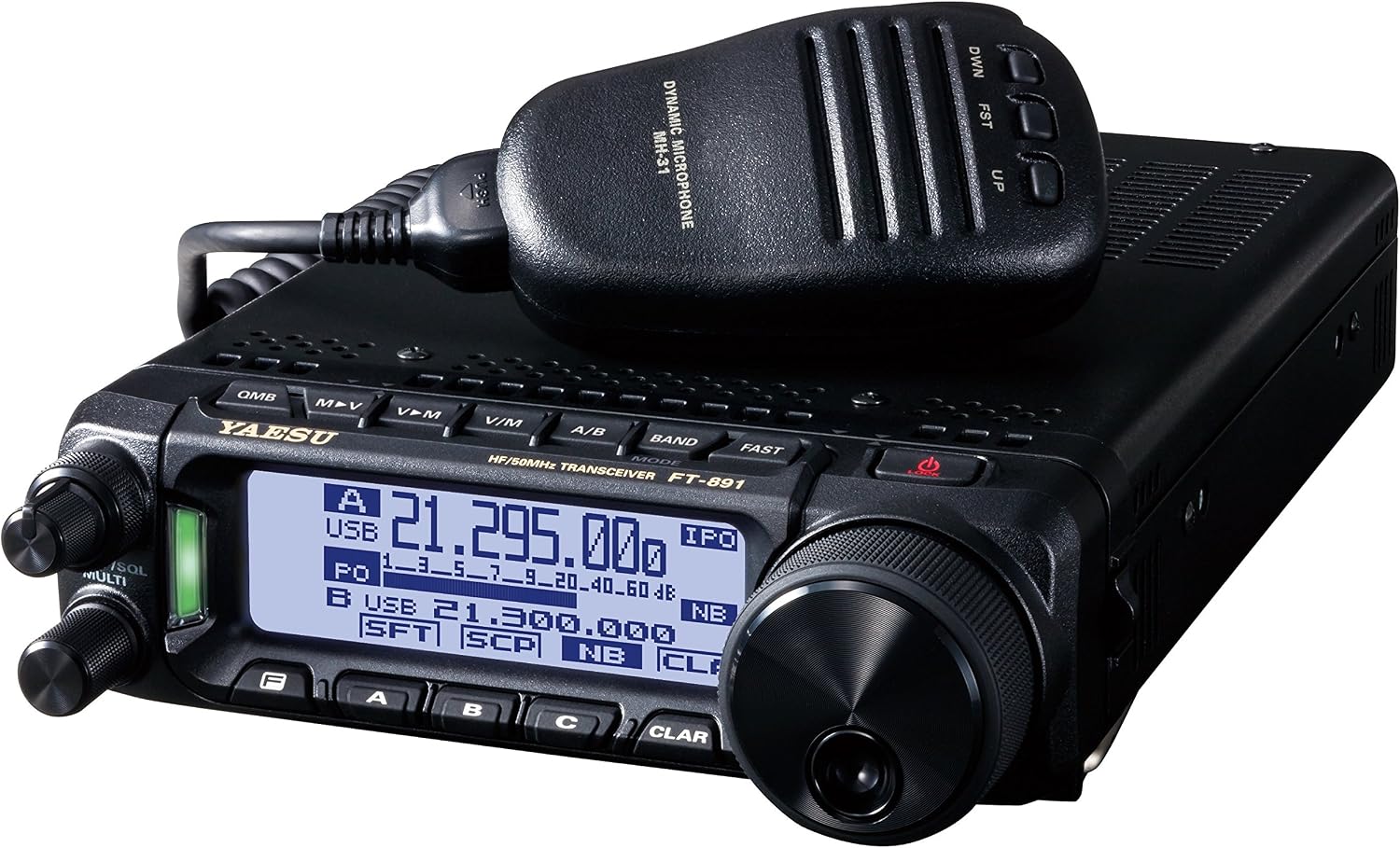
| 🔋 When you need 100W | Yaesu FT-891 | ~$770 | Full 100W HF/6m for tough conditions |
🥇 Best All-Mode Portable
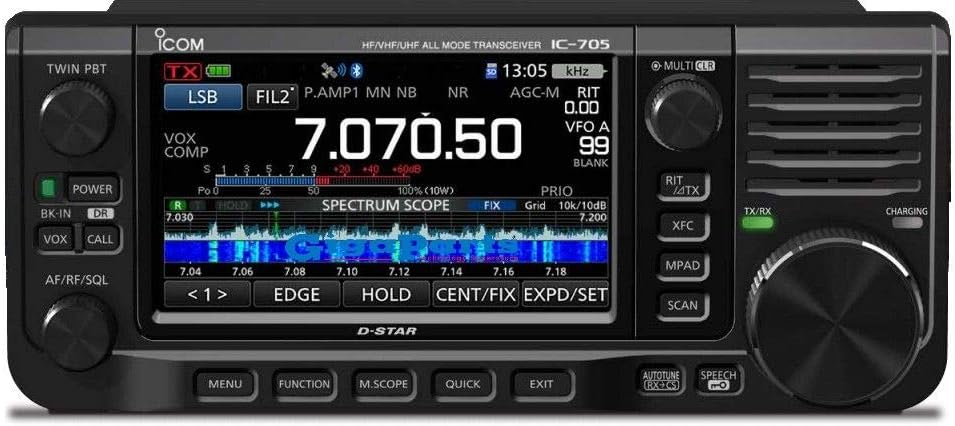
Icom IC-705
The shack-in-a-backpack. HF, 6m, 2m, and 70cm all-mode at 5–10W, with a gorgeous real-time scope, internal battery, GPS, and D-STAR. If you want one radio that does POTA, SOTA, satellites, and local repeaters, this is it.
- 5–10W
- HF/50/144/430
- Scope + battery
- GPS · D-STAR
Amazon: 4.9/5 from 34 reviews. No built-in tuner — add an external ATU.
💸 Best Value Portable SDR
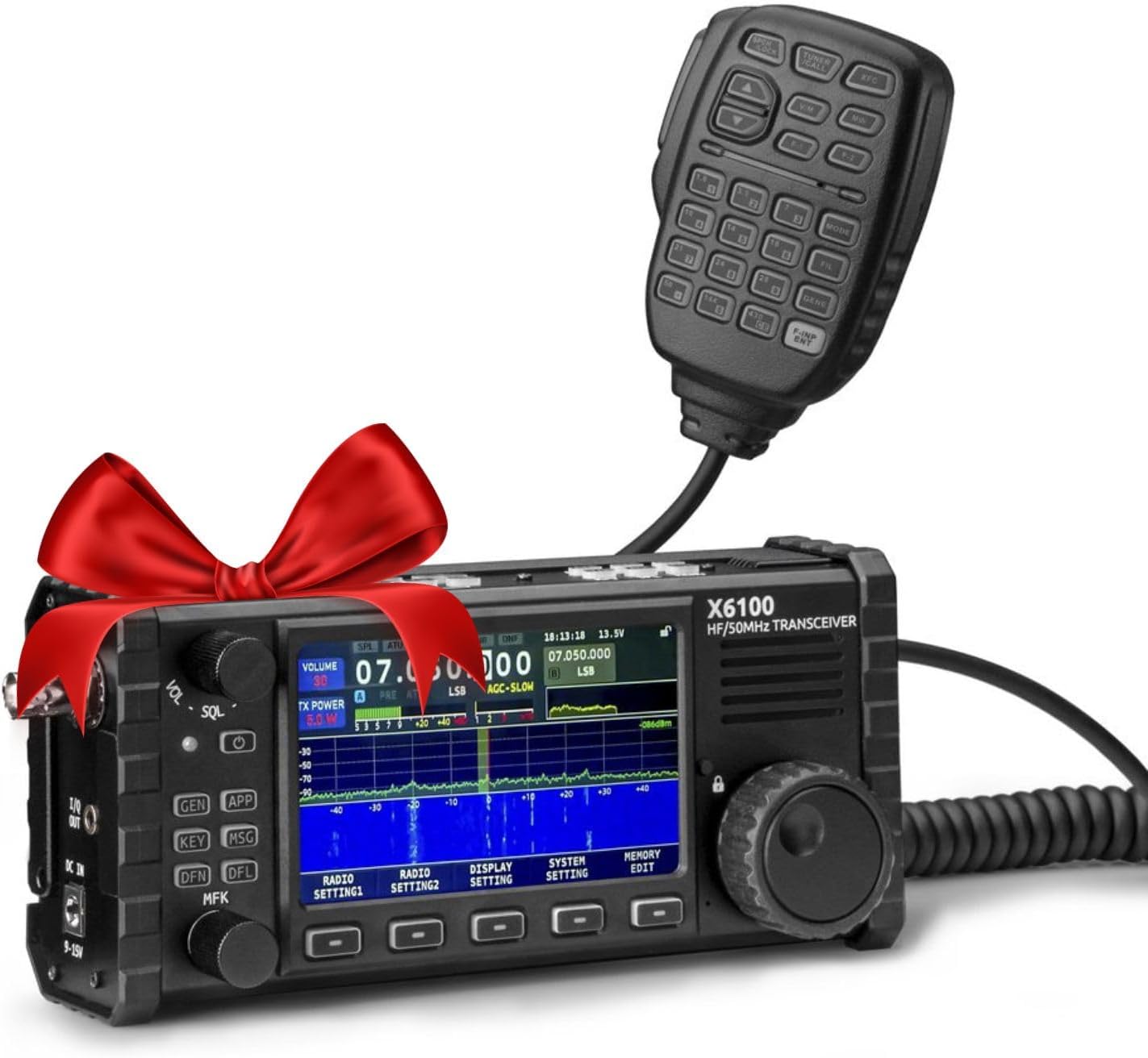
Xiegu X6100
A 10W HF/6m SDR with a 4" waterfall, internal battery, and a built-in antenna tuner — the feature the IC-705 skips. It does 80% of what the Icom does for about a third of the price.
- 10W
- HF + 6m
- Built-in ATU
- Battery + scope
Amazon: 4.1/5 from 75 reviews. Update the firmware before your first outing.
🎒 Ultralight / Cheapest
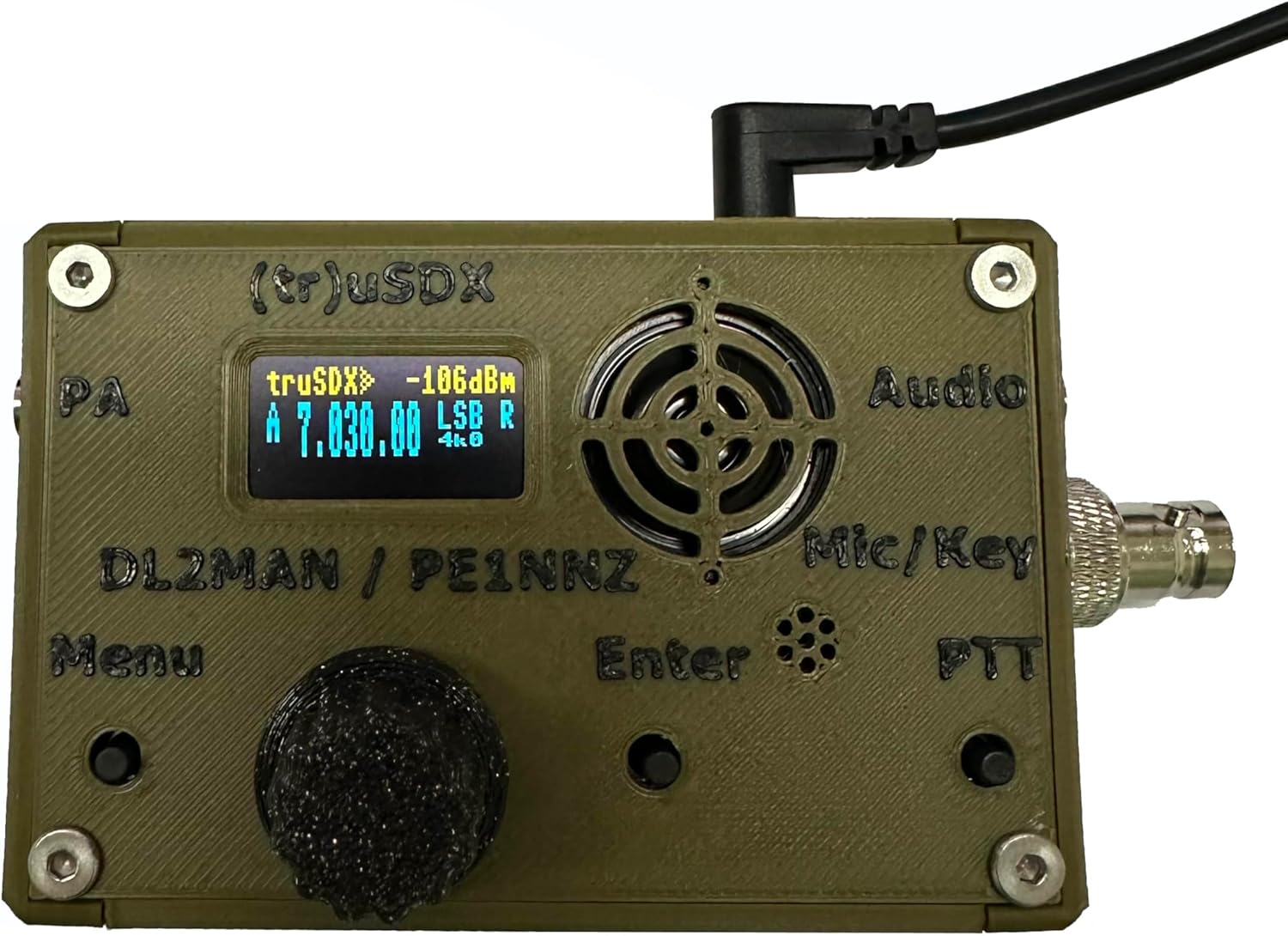
(tr)uSDX 5-Band QRP
A five-band QRP transceiver that fits in a shirt pocket and sips battery. Perfect for SOTA summits where every gram counts and CW is king. Not a do-everything rig — a delightfully minimal one.
- ~5W
- 40/20/15/10m +
- CW/SSB
- Pocket-size
Amazon: 4.4/5 from 19 reviews. Rewards CW ops and a good antenna.
🔋 When You Need 100W
Yaesu FT-891
Not QRP, but the field radio for poor conditions and pileups. 100W HF/6m in a body barely bigger than the QRP rigs — you'll just need a bigger battery. The value benchmark when watts matter.
- 100W
- HF + 6m
- Compact
Amazon: 4.6/5 from 79 reviews. Budget ~20–30Ah of LiFePO4 for a full day.
How to choose your field radio
- You want one radio for everything. The IC-705 does POTA, SOTA, satellites, and the local 2m repeater. It’s expensive, but it replaces three radios and the scope makes finding a run frequency effortless.
- You want portable SDR value. The X6100 is the sweet spot — battery, tuner, and waterfall built in, so you can walk up to a picnic table and be calling CQ in two minutes. Watch is 10m open on the drive over; when 10m is up, 10 watts is plenty.
- You count grams. The (tr)uSDX is a SOTA dream — throw it and a wire in a jacket pocket. Read our QRP propagation guide to make five watts go far.
- Conditions are rough or you love phone. The FT-891 and its 100 watts punch through when the bands are marginal and the pileups are deep.
The antenna and battery matter as much as the radio
A QRP radio into a bad antenna is a quiet afternoon. Pair any of these with a resonant field antenna and enough battery — start with our best portable HF antenna for POTA picks and a 12–20Ah LiFePO4 pack. New to activating? Our POTA beginner’s guide walks through your first ten contacts.
Who should skip these
If you only operate from home with mains power and a permanent antenna, a base radio like the IC-7300 gives you more receiver and 100W for less than the IC-705 — buy portability only if you’ll actually carry it. And if you’re purely a local VHF/UHF operator, skip HF entirely and start with a handheld.
Frequently Asked Questions
What is the best portable radio for POTA in 2026?
For most activators the Icom IC-705 is the best portable POTA radio: it’s an all-mode HF/VHF/UHF QRP rig with a battery, GPS, D-STAR, and a bright spectrum scope. If that’s too expensive, the Xiegu X6100 gives you a 10W portable SDR with a built-in tuner and battery for roughly a third of the price, and the Yaesu FT-891 is the pick when you want a full 100 watts in the field.
Is QRP enough power to activate a park?
Yes. A POTA activation needs just 10 valid contacts, and during Solar Cycle 25’s strong conditions 5–10W on 20m, 15m, and 10m regularly reaches across the country and overseas, especially on FT8 and CW. QRP struggles most on crowded phone nets and during poor conditions — that’s when a 100W radio like the FT-891 earns its weight.
What’s the difference between the IC-705 and the Xiegu X6100?
Both are 10W portable SDRs with spectrum scopes and internal batteries. The IC-705 adds VHF/UHF all-mode, D-STAR, GPS, and Icom’s receiver refinement — at roughly three times the price. The X6100 covers HF plus 6m, includes a built-in antenna tuner the IC-705 lacks, and costs far less. The X6100 is the value; the IC-705 is the do-everything flagship.
Do I need a radio with a built-in antenna tuner for POTA?
It helps a lot with the compromise antennas common in the field. The Xiegu X6100 and G90 include one; the IC-705 and FT-891 do not, so you’ll want an external tuner or a resonant antenna like an end-fed half-wave. Pair any of these with our portable antenna picks and carry a small tuner if your antenna isn’t already resonant.
What is the cheapest way to get on HF for POTA?
The (tr)uSDX-style five-band QRP transceivers cost around $100–130 and put you on 40/20/15/10m in CW and SSB from a shirt pocket. They demand a good antenna and reward CW operators, but nothing else gets you on multiple HF bands for less. Treat it as a fun ultralight kit, not a do-everything rig.