This article contains affiliate links. If you buy through them we may earn a commission at no extra cost to you. We only recommend gear we’d carry to a park ourselves, and we never fake test results — prices and ratings are pulled from Amazon and change constantly.
The antenna is where POTA and SOTA are won or lost. Ten watts into a good wire beats a hundred into a bad vertical, and the “best” portable antenna is simply the one that matches your site and your patience. This guide ranks the antennas by how you actually deploy — self-supporting vertical, hang-it-in-a-tree wire, or do-everything modular — with honest notes on the direct-from-vendor options worth knowing about too.
Quick Picks
| Deploy style | Antenna | ~Price | Why |
|---|---|---|---|
| 🥇 Self-supporting vertical | JPC-12 | ~$139 | 40m–6m, no trees, fast setup |
| 💎 Do-everything modular | Chameleon MPAS 2.0 | ~$620 | Vertical, sloper, or horizontal |
| 🎒 Whip for a homebrew vertical | MFJ-1979 | ~$95 | 17 ft stainless telescoping whip |
🥇 Best Self-Supporting Vertical
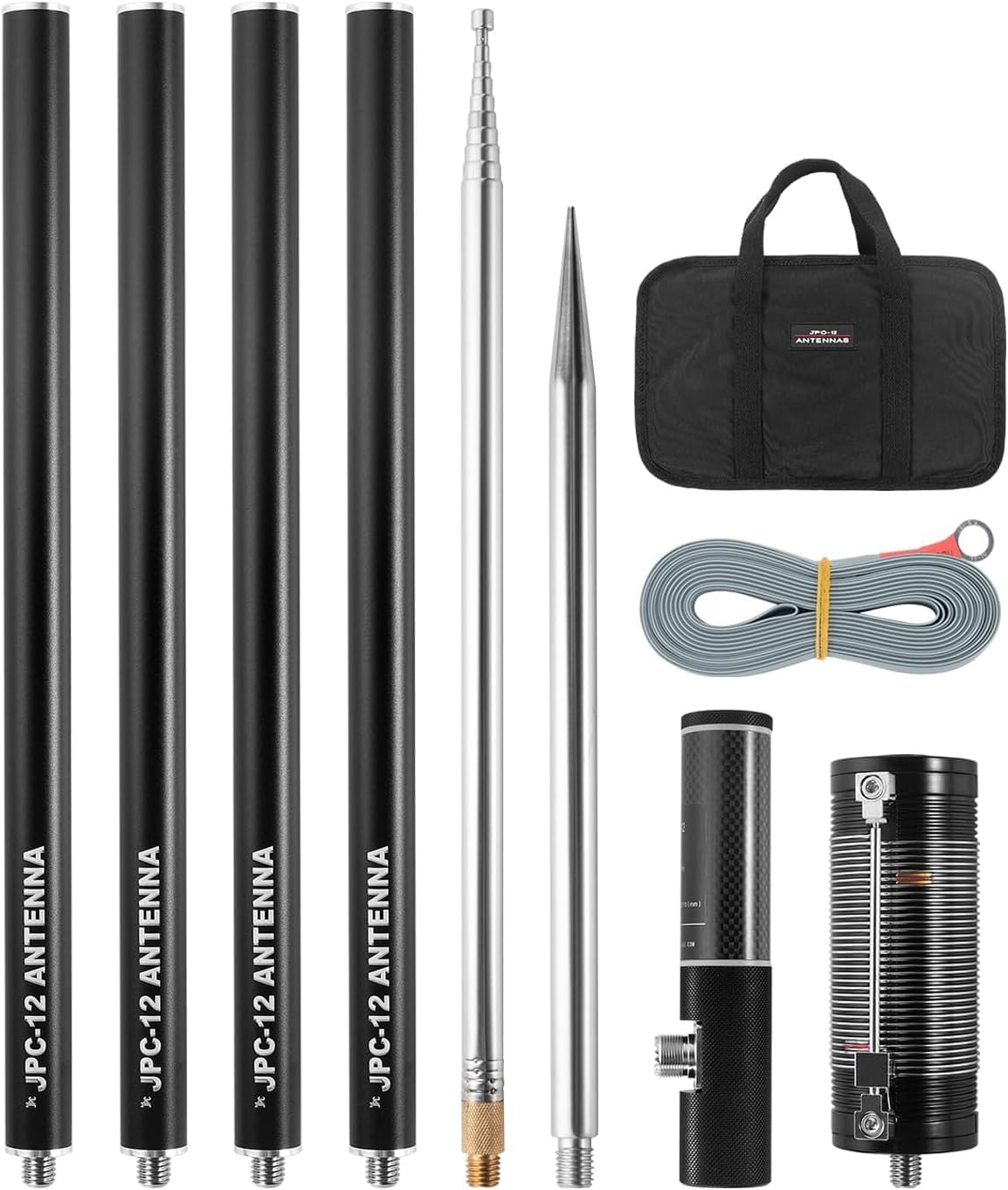
JPC-12 HF Vertical
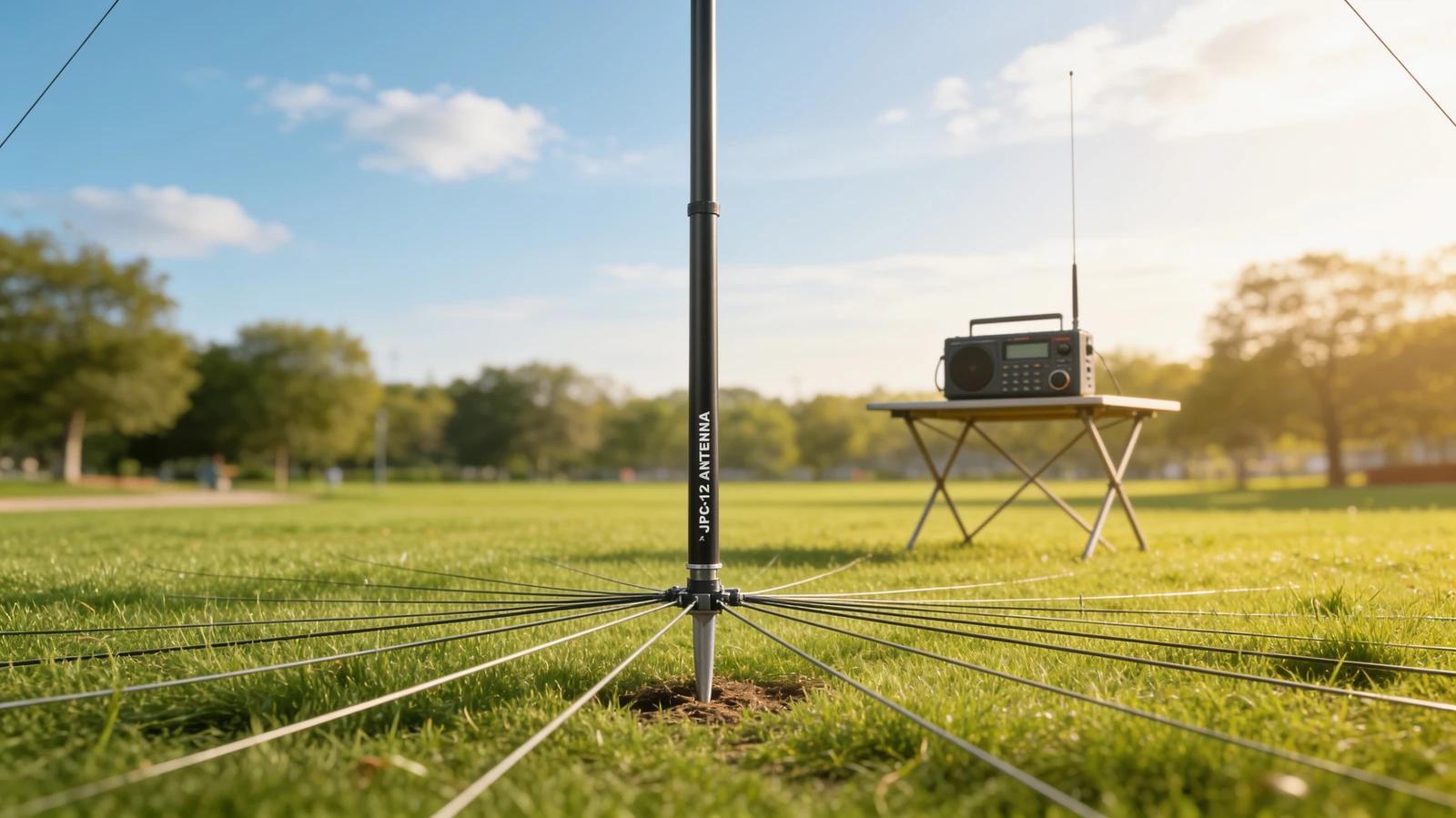
A POTA workhorse: an 8-band 40m–6m portable vertical with a ground spike and counterpoise that sets up in minutes in an open field or parking lot. No trees required, and the low-angle radiation favors DX.
- 7–50 MHz
- Vertical + spike
- ~2 min setup
Amazon: 4.7/5 from 275 reviews. Lay out the counterpoise for best SWR.
💎 Best Modular / Versatile
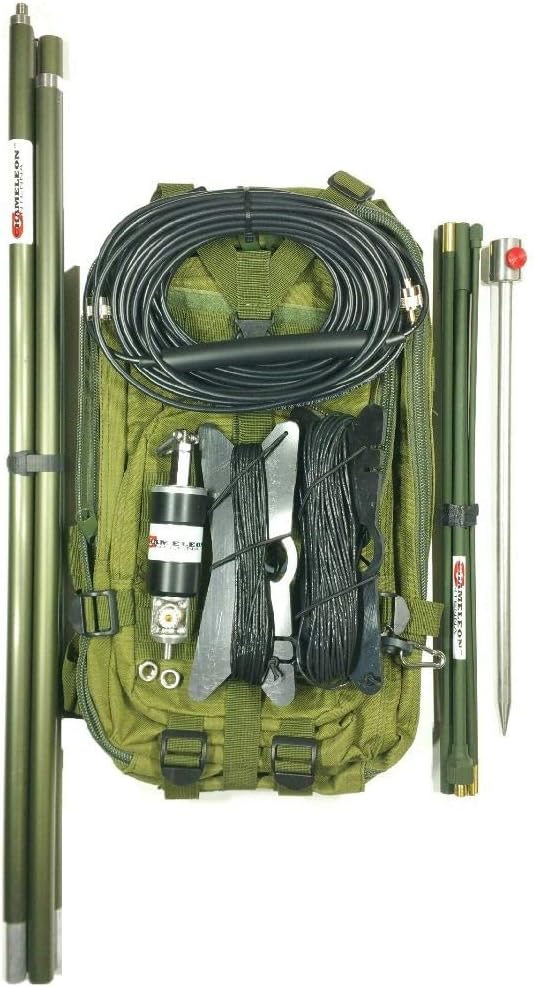
Chameleon MPAS 2.0
A rugged 1.8–54 MHz modular system that reconfigures into a vertical, sloper, or horizontal antenna from one kit. Overkill for a casual activation, ideal for EMCOMM and operators who want one antenna for every situation.
- 1.8–54 MHz
- Modular
- EMCOMM-grade
Amazon: 5/5 from early reviews. Premium price, premium flexibility.
🎒 Best Telescoping Whip
MFJ-1979 17 ft Whip
A 17-foot stainless telescoping whip — the building block for a homebrew vertical or a loading-coil setup. Collapses small, extends tall, and pairs with a coil and radials for a light, effective field antenna.
- 17 ft
- Stainless
- Whip element
Amazon: 4.4/5 from 29 reviews. Needs a coil/mount and radials to resonate.
The wire option worth knowing about
The best-kept “value” in POTA antennas is the resonant end-fed half-wave (EFHW) wire. When you have a tree or a mast, an EFHW is light, quiet, extremely efficient, and needs no radials — many activators consider it the single best portable HF antenna. The catch for this guide: the most-loved EFHW makers (Tufteln, Packtenna, MyAntennas) sell direct from their own sites rather than Amazon, so they don’t get an affiliate card here — but they’re absolutely worth seeking out if you want the wire route. A simple linked dipole is another cheap, superb performer if you don’t mind a little more setup.
Antenna types & weight — the POTA/SOTA reality
Before you buy, it helps to know the four wire/vertical types and what each weighs, because on a hike grams matter as much as gain:
- End-fed half-wave (EFHW): the POTA default. A 20m EFHW (~10.1 m of wire) with a 49:1 transformer hangs in any direction from a single support, works 40/20/15/10m with a tuner, and weighs just 150–250 g. Best all-round wire.
- Linked dipole: the SOTA classic. Wire sections joined by quick-disconnect links; you reconnect at the right points to change bands, no tuner needed. A 5-band linked dipole weighs about 180–300 g. Trade 30–60 seconds per band change for excellent efficiency.
- Vertical (JPC-12, MPAS): self-supporting, low take-off angle for DX, no trees needed — but wants radials and picks up more local noise. Heavier, but deploys anywhere.
- Random wire: any non-resonant length through a 9:1 UNUN and a counterpoise. Simplest and lightest, but do it properly or the coax shield becomes part of the antenna and puts RF on your table.
Weight targets: under ~500 g of antenna kit for drive-up POTA, under ~200 g for a serious SOTA hike. All of the above hit those numbers without compromising performance — deployment style, not weight, is the real choice.
How to choose
- Open field, no trees, want fast. The JPC-12 vertical is the answer — spike it in, spread the counterpoise, and you’re calling CQ in two minutes.
- You want one antenna for everything. The Chameleon MPAS 2.0 reconfigures for any site and any band from 160m to 6m.
- You like to build and go ultralight. The MFJ-1979 whip plus a coil makes a light homebrew vertical; or go the EFHW/linked-dipole route for the best efficiency per gram.
Pair whatever you choose with the right radio and battery — see our best portable HF radio for POTA and SOTA and field battery guides — and check what’s open before you set up. New to activating? Start with our POTA beginner’s guide.
Who should skip these
If you only operate from home with room for a permanent antenna, a fixed vertical or wire up high will beat any compact portable — buy portability only if you’ll carry it. And if you’re a dedicated SOTA hiker counting grams, skip the heavier verticals entirely and go straight to a lightweight EFHW or linked dipole.
Frequently Asked Questions
What is the best antenna for POTA in 2026?
It depends on how you deploy. For a quick, self-supporting setup with no trees needed, a portable vertical like the JPC-12 is the POTA workhorse — it covers 40m–6m and sets up in minutes. If you have a tree and want the best efficiency for the weight, an end-fed half-wave wire is hard to beat. And for maximum versatility across configurations, the Chameleon MPAS 2.0 modular system does vertical, sloper, and horizontal from one kit.
Vertical or end-fed wire for POTA — which is better?
Both work well; they suit different sites. A vertical needs no supports and radiates low-angle signal that favors DX, but wants radials and can be noisier. An end-fed half-wave wire needs a tree or mast to hoist it, is very efficient and quiet, and is the lightest option for the performance. Bring a vertical for open fields and parking lots; a wire when there’s a tree to use.
Do I need radials for a portable vertical antenna?
Most compact verticals work far better with at least a few radial or counterpoise wires laid on the ground — they complete the antenna and lower the SWR and noise. Systems like the JPC-12 and Chameleon MPAS include or recommend a counterpoise. A resonant end-fed half-wave, by contrast, needs no radials, which is part of its appeal for ultralight operating.
What’s the best budget POTA antenna?
A resonant end-fed half-wave wire kit is the best performance-per-dollar for POTA if you have something to hang it from — many good options exist from ham vendors. For a self-supporting budget vertical, the JPC-12 gives you 40m through 6m for around $140. A simple linked dipole is even cheaper and very effective, at the cost of a bit more setup time.
Can I use one antenna for both POTA and home?
Yes — a good portable vertical or end-fed wire works fine as a temporary home antenna, and many operators use the same antenna for both. The Chameleon MPAS 2.0 is explicitly designed to reconfigure between portable and semi-permanent use. Just remember that a permanent home antenna up high will usually outperform any compact portable when you have the space.
How much should a portable antenna kit weigh?
For drive-up or short-walk POTA, keep the whole antenna kit under about 500 grams and you’ll never notice it. For SOTA hikes of two hours or more, target under 200 grams for the antenna itself. An end-fed half-wave kit with wire, a 49:1 transformer, and support cord typically runs 150–250 grams; a linked dipole 180–300 grams. Those are achievable without any performance compromise — weight is mostly about wire gauge and hardware choices.
What is a random wire antenna and does it work for POTA?
A random wire is any convenient non-resonant length of wire fed through a 9:1 or 4:1 UNUN and a tuner, with a counterpoise wire on the ground. Its appeal is simplicity — throw up whatever length fits between trees and tune it on every band. The catch is that without a proper counterpoise the coax shield becomes part of the antenna, putting RF on your operating position. Done right, a 7–12 metre random wire with a UNUN and counterpoise works all HF bands and is very light.