This article contains affiliate links. If you buy through them we may earn a commission at no extra cost to you. Prices and ratings come from Amazon and change constantly.
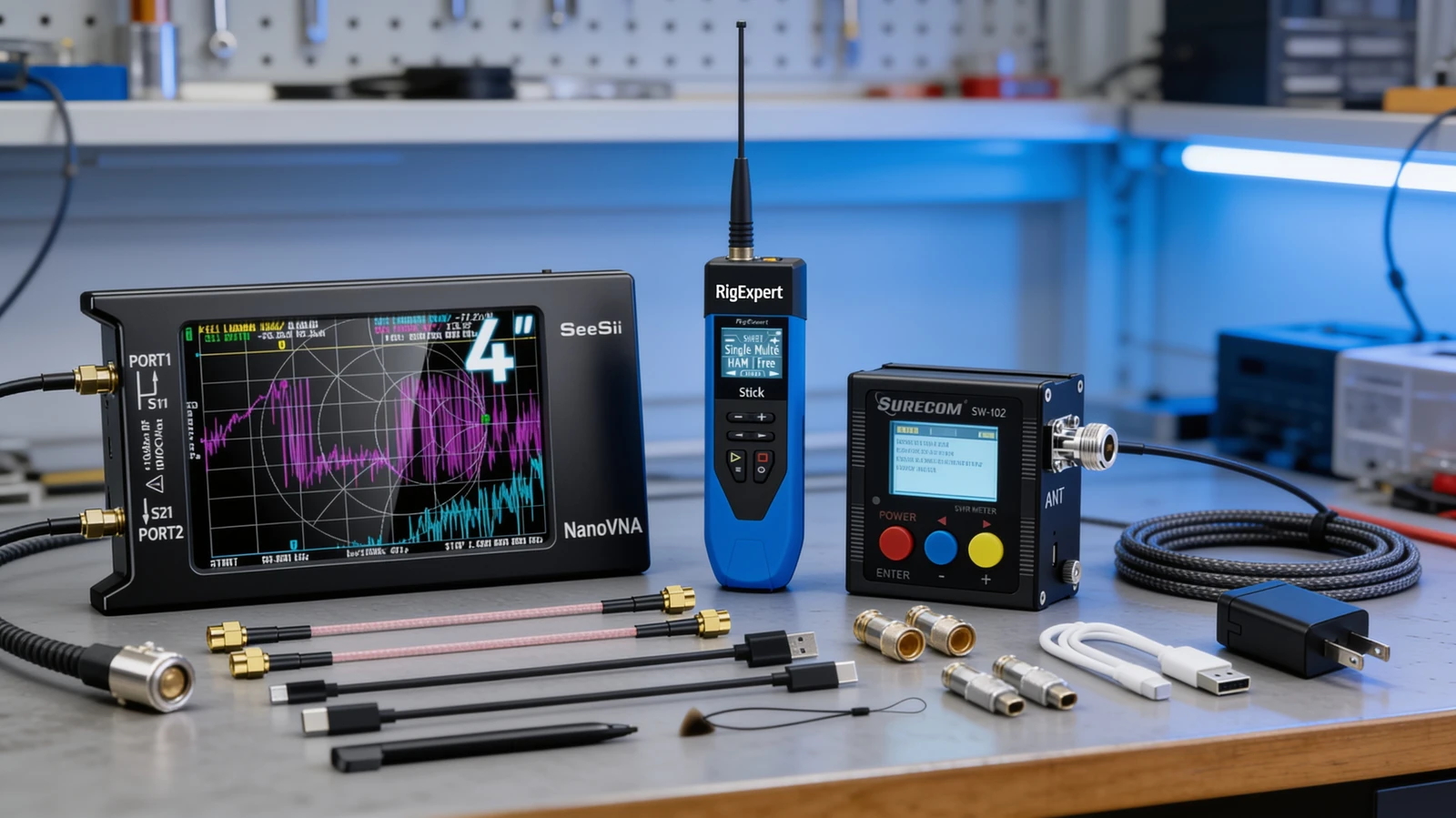
An antenna analyzer is the tool that ends the guesswork. Instead of keying up, watching an SWR needle, trimming a wire, and repeating, you sweep a band once and see exactly where your antenna is resonant. It’s the fastest upgrade to your on-air results because a well-matched antenna does more than more watts ever will. Here are three tools for three budgets and needs — from a pocket SWR meter to a full vector network analyzer.
Quick Picks
| Need | Tool | ~Price | Why |
|---|---|---|---|
| 🥇 Best value / most capable | NanoVNA-H4 | ~$97 | Full VNA, HF–UHF, touchscreen |
| 🎯 Best ham-friendly | RigExpert Stick 230 | ~$368 | Rugged, simple, purpose-built |
| 💸 Cheapest SWR check | Surecom SW-102 | ~$58 | Inline power/SWR meter |
🥇 Best Value / Most Capable
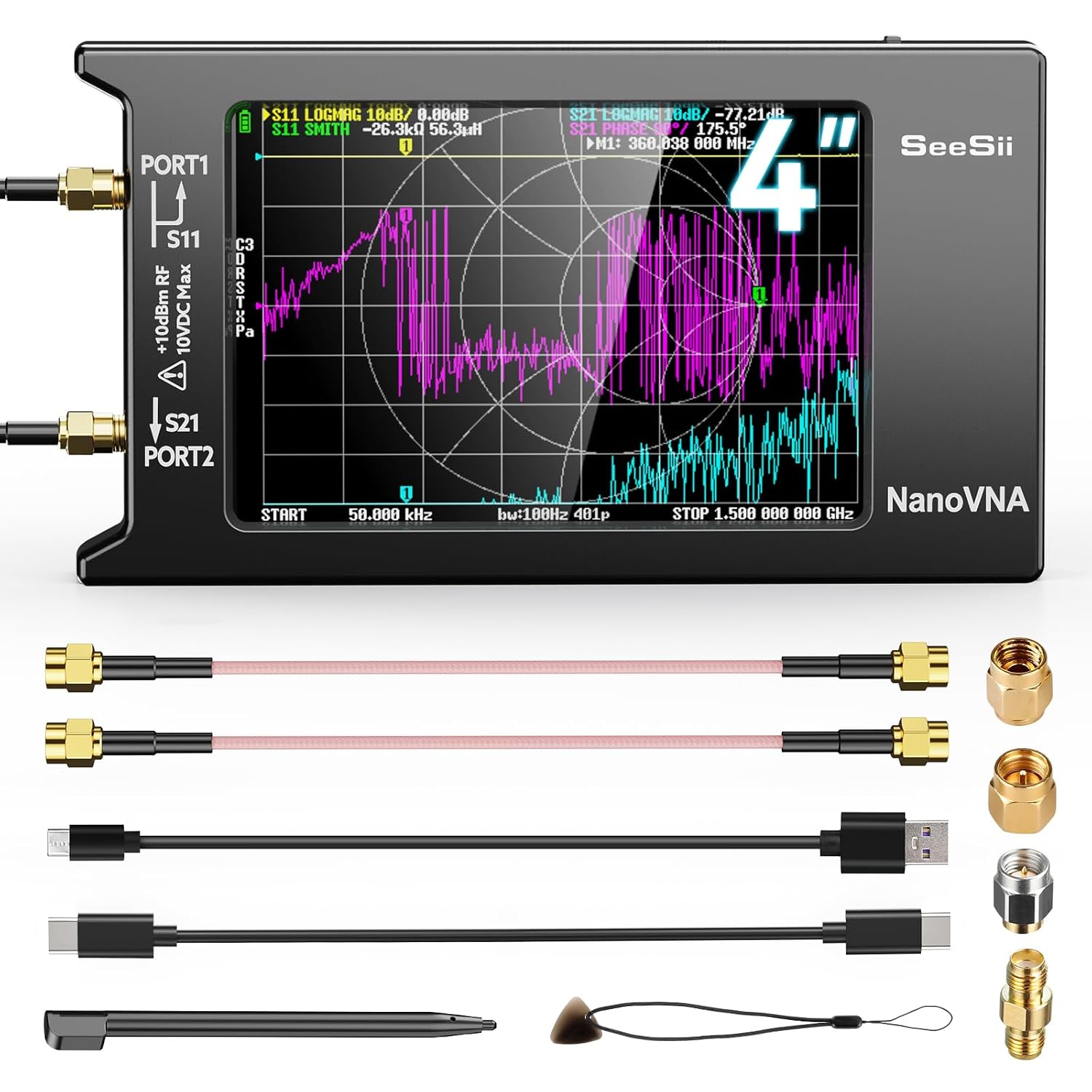
NanoVNA-H4
A genuine vector network analyzer for under $100. Sweep any band from 80m to 70cm, read SWR and impedance on a 4" touchscreen, and test cables and filters too. The most capability per dollar in ham test gear.
- 10kHz–1.5GHz
- Full VNA
- 4" touchscreen
Amazon: 4.6/5 from 907 reviews. Calibrate with the supplied loads before measuring.
🎯 Best Ham-Friendly
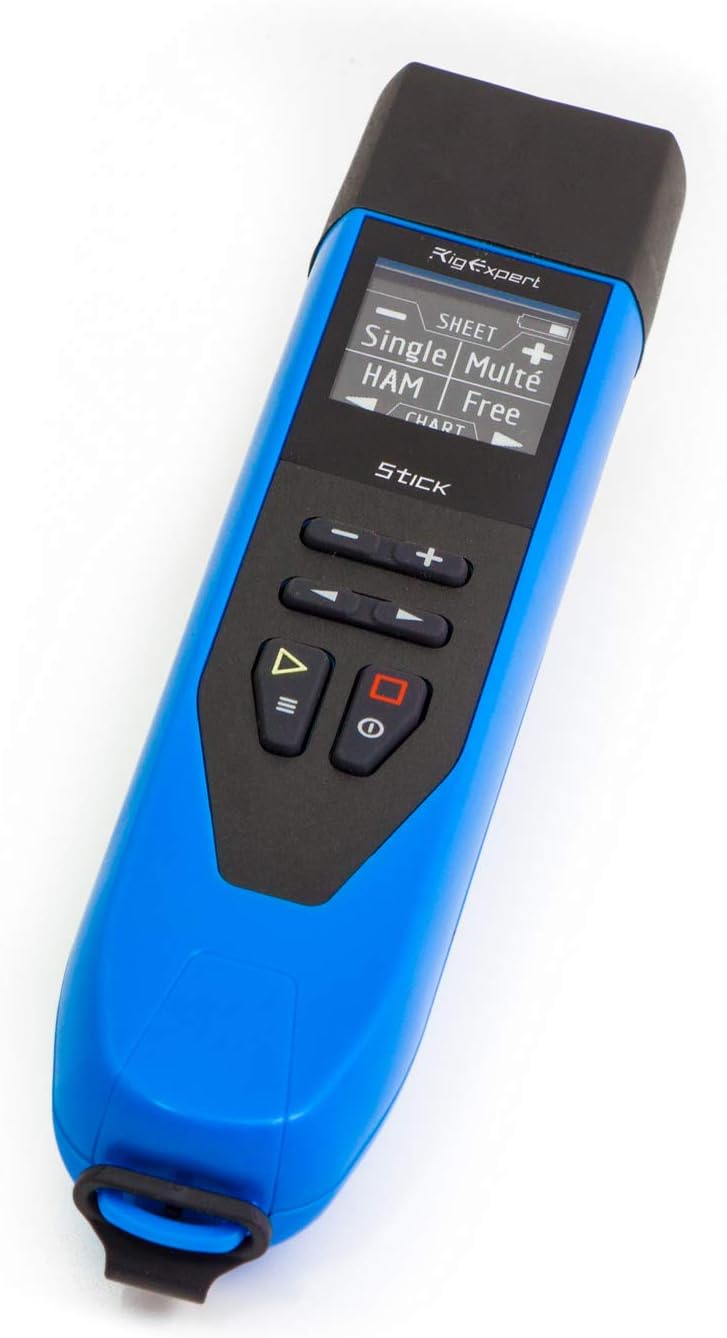
RigExpert Stick 230
A rugged, pocket antenna analyzer built specifically for hams. Simpler and tougher than a NanoVNA, with a clean interface that shows SWR and resonance without a learning curve. You pay for the polish.
- 100kHz–230MHz
- Pocket-size
- Simple UI
Amazon: 4.8/5 from 43 reviews. Great for field antenna work.
💸 Cheapest SWR Check
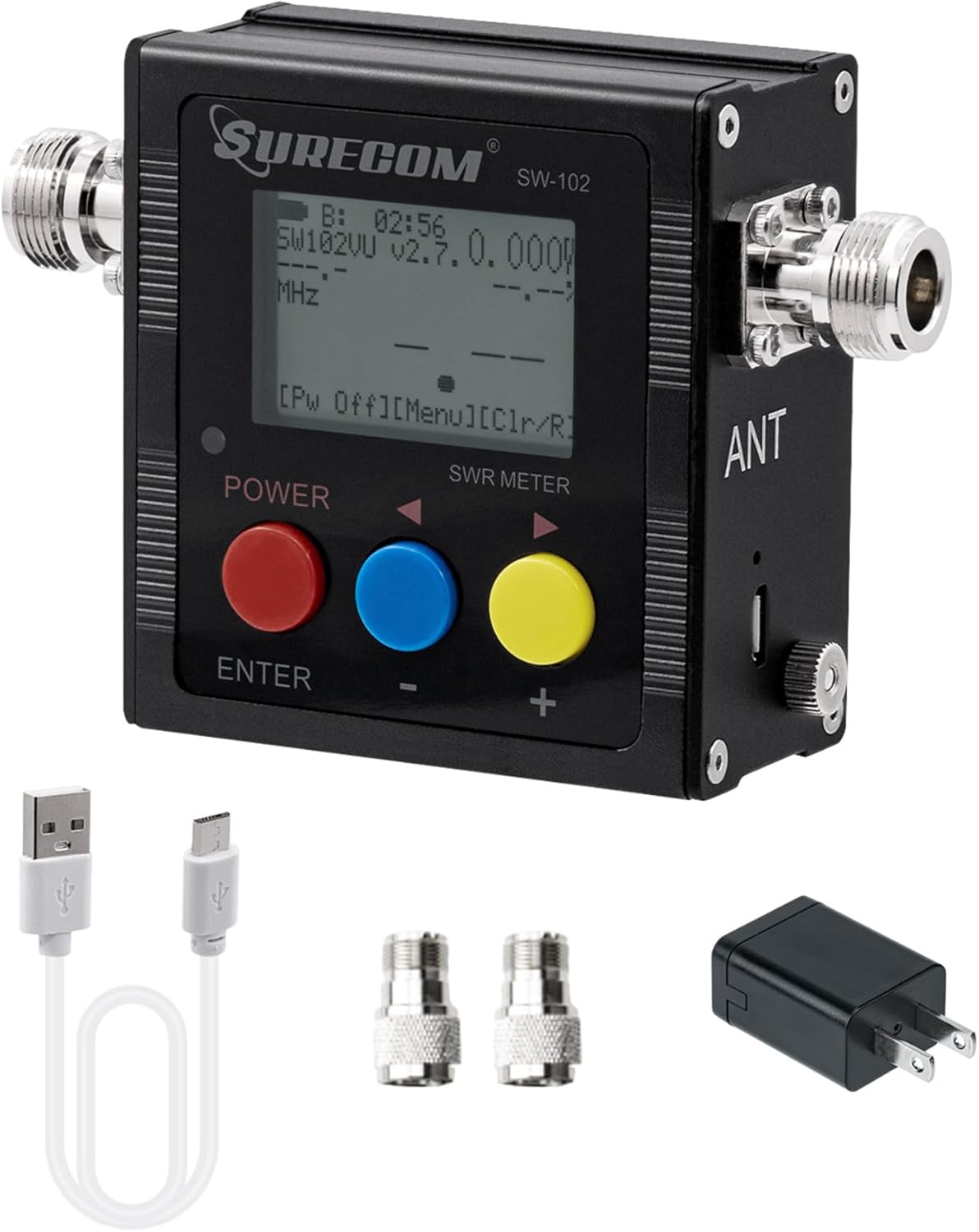
Surecom SW-102
Not an analyzer — an inline digital SWR and power meter for VHF/UHF. Slip it between your HT or mobile and antenna to read power and SWR at a glance. The cheapest way to confirm a match.
- 125–525MHz
- Power + SWR
- Inline
Amazon: 4.7/5 from 2,155 reviews. Monitors, doesn't sweep — pair with an analyzer for tuning.
Analyzer or SWR meter — which do you need?
- You build or tune antennas. Get the NanoVNA-H4. Sweeping a band and watching the resonant dip move as you trim a wire is the single fastest way to a well-matched antenna. It also finds bad coax and connectors — a common hidden cause of high SWR.
- You want ham-simple and rugged. The RigExpert Stick 230 does antenna work with less fuss and better build quality, if the price fits.
- You just want to check a mobile or HT. The Surecom SW-102 inline meter reads power and SWR without any setup.
Why matching matters more than watts
A resonant antenna delivers your power efficiently; a mismatched one wastes it as heat and can fold back your radio’s output to protect itself. Getting an antenna to a good match on the band you want to work — say, tuning a vertical for the 40m or 20m sweet spot — often does more for your signal than an amplifier would. Use the analyzer alongside our antenna picks to get every antenna singing.
Who should skip these
If you only ever run a single, pre-tuned commercial antenna and never touch it, you don’t strictly need an analyzer — a $15 inline SWR meter will confirm it’s fine. And if you want lab-grade accuracy for commercial work, a NanoVNA isn’t a calibrated bench instrument. For 99% of home and field ham antenna tuning, though, one of these three is exactly right.
Frequently Asked Questions
What is the best antenna analyzer for ham radio in 2026?
For most hams the NanoVNA-H4 is the best value: it’s a full vector network analyzer that tunes any HF/VHF/UHF antenna, shows SWR and impedance curves on a touchscreen, and costs under $100. If you want a simpler, rugged, ham-focused tool with a friendlier interface, the RigExpert Stick 230 is excellent but pricier. For just checking SWR on a handheld or mobile, the Surecom SW-102 inline meter is all you need.
NanoVNA vs RigExpert — which should I buy?
The NanoVNA-H4 does far more for far less money — full impedance measurement, filter and cable testing, and multi-band sweeps — but has a steeper learning curve and less rugged hardware. The RigExpert Stick 230 is simpler, better built, and purpose-designed for antenna work, which many operators find worth the premium. Buy the NanoVNA for capability and value; the RigExpert for ease of use and durability.
Do I really need an antenna analyzer?
If you build, tune, or troubleshoot antennas, yes — it’s the single most useful piece of test gear you can own. It turns antenna tuning from guesswork into a two-minute measurement, tells you exactly where your antenna is resonant, and reveals feedline and connector problems. If you only run a pre-tuned commercial antenna, a cheap inline SWR meter is enough.
What’s the difference between an antenna analyzer and an SWR meter?
An SWR meter measures the standing wave ratio while you transmit — a single number that tells you how well matched your antenna is right now. An antenna analyzer is a transmit-free instrument that sweeps a range of frequencies and shows SWR, impedance, and resonance across a whole band, so you can see where the antenna is tuned and adjust it. Analyzers are for tuning; SWR meters are for monitoring.
Can a NanoVNA tune HF antennas?
Yes. The NanoVNA-H4 covers roughly 10 kHz to 1.5 GHz, which includes all the HF, 6m, 2m, and 70cm ham bands. You can sweep 80m through 70cm, read the resonant frequency and SWR, and trim a dipole or adjust a vertical to hit the band you want. Calibrate it with the supplied loads first for accurate readings.