This article contains affiliate links. If you buy through them we may earn a commission at no extra cost to you.
Operator’s Verdict: Standardize every 12V connection you own on Anderson Powerpoles assembled “Red Right, Tongue Top,” fuse both leads at the battery, and match contact size to wire gauge (15A/16–20 AWG, 30A/12–14 AWG, 45A/10–12 AWG). Do it once, and your radio plugs into your pack, your club’s Field Day distribution, and any ARES setup on the continent.
Why Powerpole Won Ham Radio
Powerpoles are genderless — there is no plug and socket, every connector mates with every other one. That single property is why ARES/RACES groups adopted them as the 12V standard: in an emergency deployment (or a casual Field Day), anyone’s radio connects to anyone’s power without an adapter drawer. The housings for 15A, 30A, and 45A contacts are all the same PP15/45 shell, so a QRP rig’s thin cable mates directly with a 45A distribution feed.
The catch: genderless only works if everyone assembles the red/black pair the same way. That’s the convention.
Red Right, Tongue Top
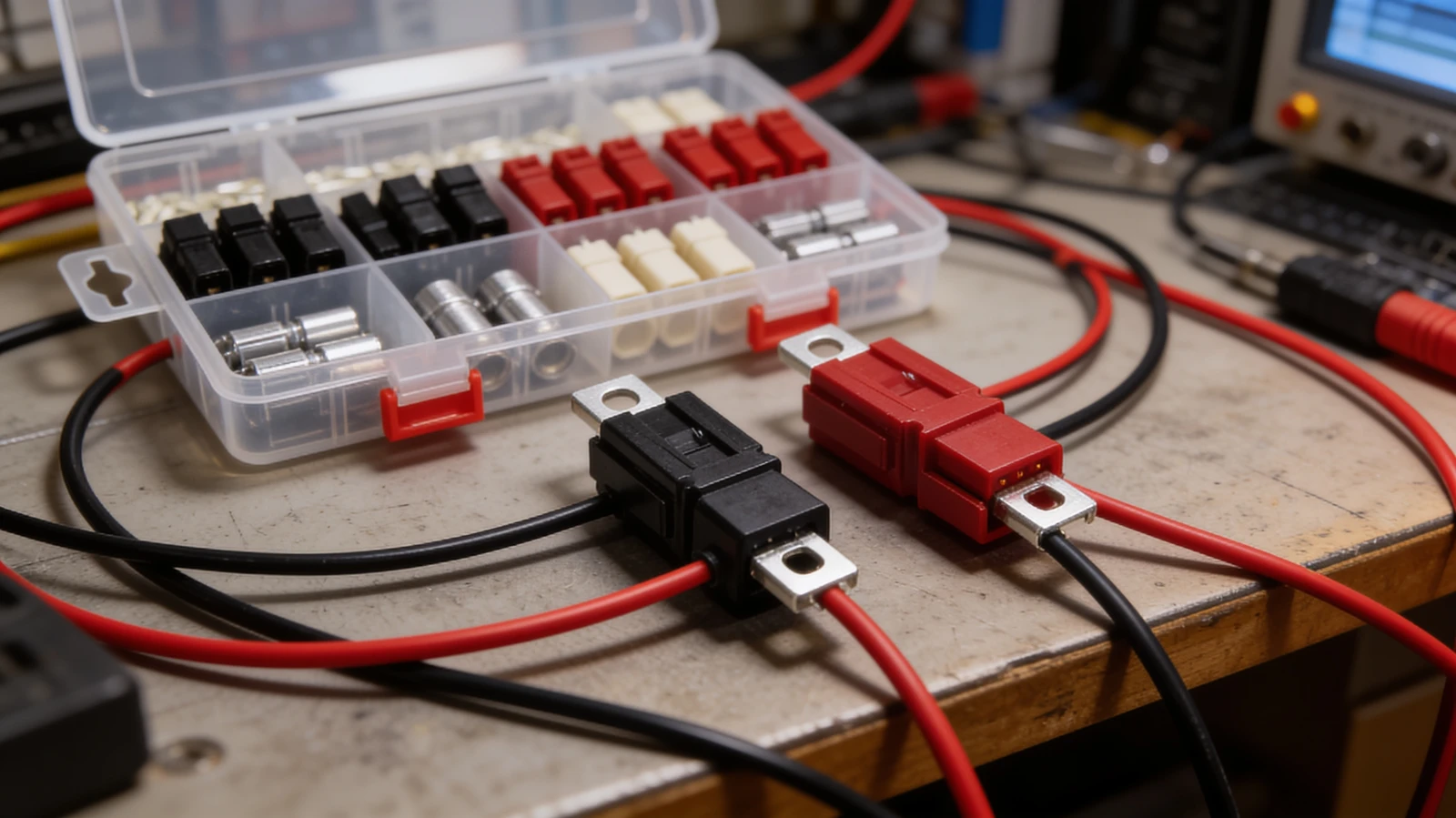
Hold the assembled pair so you’re looking into the mating face, with the metal contact tongues at the top of each opening. Red goes on the right. That’s the whole rule — the ARES/RACES standard orientation documented across the hobby. Two housings dovetail together with a stainless roll pin (included in every kit) that locks them side by side.
Assemble one connector backwards and it will still mate — with reversed polarity, straight into your radio’s finals. Check the orientation before you crimp, and again before you crimp the second end.
Contact Size Follows Wire, Not Radio
| Contact | Wire gauge | Typical use |
|---|---|---|
| 15 A | 16–20 AWG | QRP radios (IC-705, KX2), accessory leads |
| 30 A | 12–14 AWG | 100W radios (FT-891, IC-7300 class) |
| 45 A | 10–12 AWG | Battery feeds, distribution blocks, amps |
All three sizes mate with each other. Pick the contact for the wire you’re terminating; pick the wire for the current it carries. A 100W radio pulling 23A on transmit (per Yaesu’s FT-891 spec) belongs on 12 AWG with 30A contacts — 16 AWG zip cord will sag voltage at every peak.
Assembly in Five Steps
- Strip about 1/4” of insulation — the wire should fill the contact barrel with no stray strands.
- Crimp with a Powerpole-style crimper for a rolled crimp (or solder carefully — don’t let solder wick past the barrel, which makes a stiff stress point).
- Insert the contact into the housing, tongue side toward the housing’s spring, until it clicks. It should tug-test solid.
- Join red and black in Red Right, Tongue Top orientation and tap the roll pin through the dovetail.
- Tug-test again. A contact that isn’t fully seated will back out under vibration — the classic mystery power dropout.
Fuse Both Leads at the Battery
A LiFePO4 pack can source hundreds of amps into a short before its BMS reacts. Put inline ATC/ATO fuse holders on both leads as close to the battery as practical, sized roughly 25–30% above your radio’s maximum draw (30A fuse for an FT-891, 5–10A for QRP). Everything downstream — dropped wrench, chafed cable, miswired accessory — then costs you a fuse, not a fire.
For more than one device, a Powerpole distribution block (RIGrunner-style) puts every load on its own fused output. For simple POTA kits, a fused Y-cable does the job.
Pro Tip: Once your kit is standardized, sizing the battery is the only variable left per trip — the POTA power budget calculator turns your radio, mode, and hours into required amp-hours, computed from manufacturer draw specs.
The Kit Worth Buying
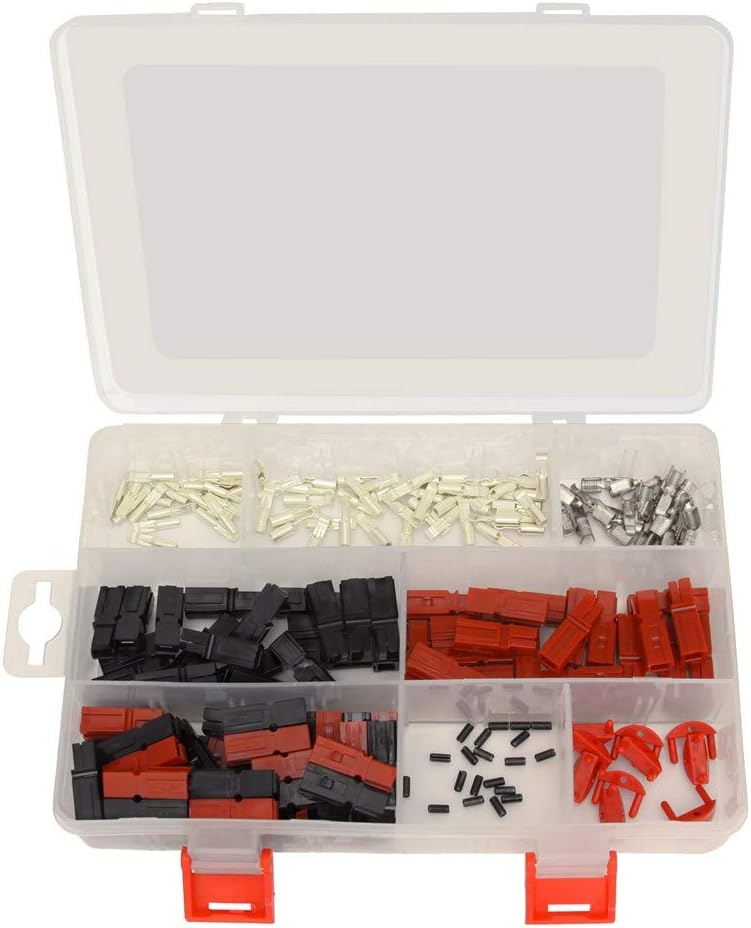
The station standardizer
Powerwerx PowerpoleCase 150
150 assorted 15/30/45A genuine Powerpole housings and contacts in an organizer case — enough to convert an entire shack plus field kit.
- 15/30/45 A
- Genuine Anderson
- Roll pins incl.
Amazon: 4.9/5 from 33 reviews.
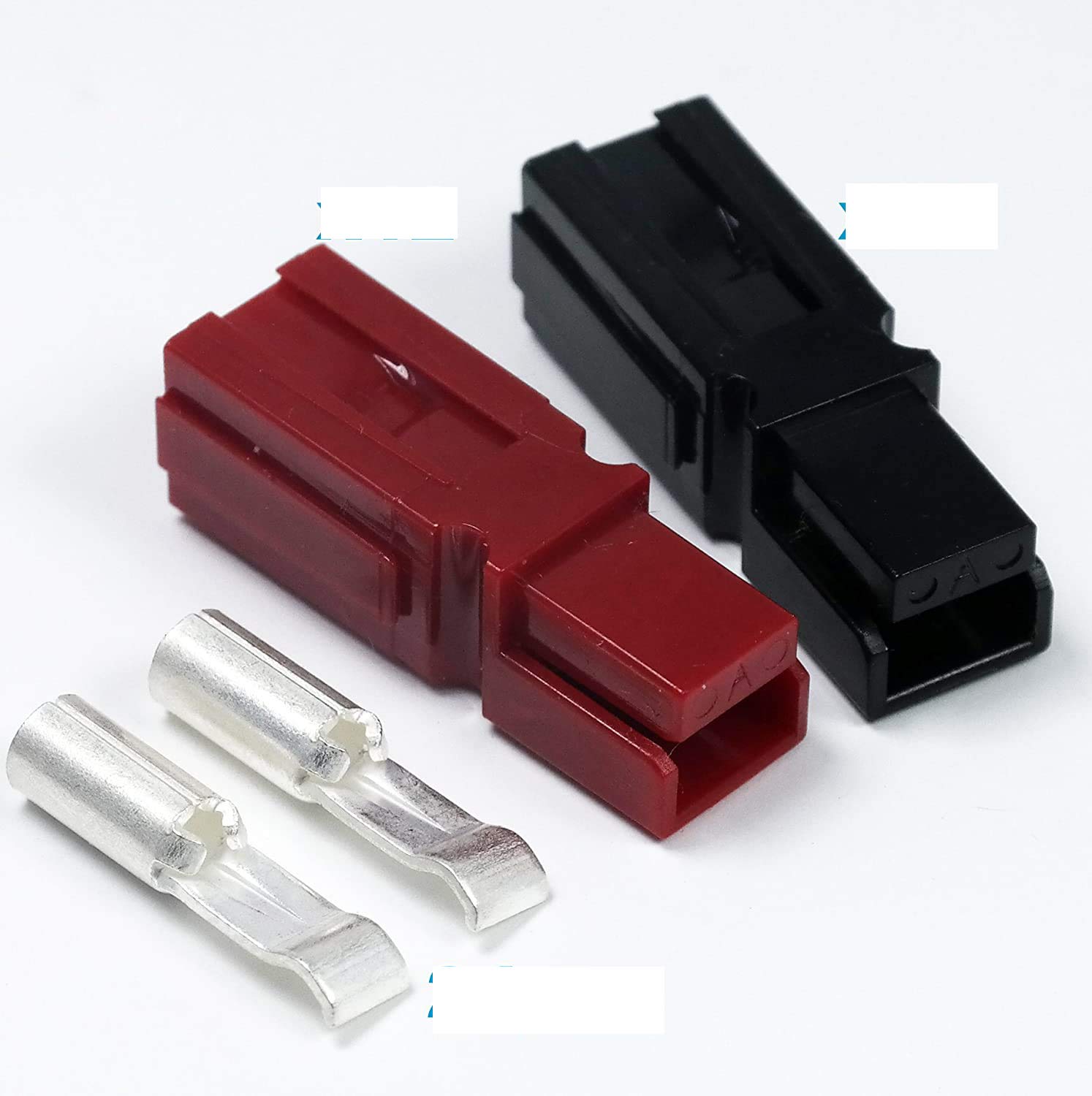
Just-the-basics pack
Anderson 30A Powerpole 12-Set
A dozen 30A connector sets — converts a radio, a battery, and a spare cable without the full case.
- 30 A contacts
- 12–16 AWG
- 12 sets
Amazon: 4.6/5 from 313 reviews.
Round out the kit with a Powerpole crimping tool and inline ATC fuse holders for the battery leads.
Frequently Asked Questions
Which way do Anderson Powerpoles go together — red left or red right?
The amateur radio (ARES/RACES) convention is “Red Right, Tongue Top”: looking into the mating face with the contact tongues upward, the red housing sits on the right. Assemble every pair in your station this way and your gear will mate with virtually any club’s power system without adapters.
What size Powerpole contacts do I need for my radio?
All three common contacts (15A, 30A, 45A) fit the same PP15/45 housing and mate with each other — the size matches your wire, not the connector shell. Use 15A contacts for 16–20 AWG wire (QRP radios), 30A for 12–14 AWG (100W radios), and 45A for 10–12 AWG (distribution feeds and amplifier supplies).
Do I need the expensive crimper for Powerpoles?
A proper Powerpole crimper produces a consistent roll crimp and pays for itself if you’ll build more than a handful of cables; many club members share one. The budget alternative is a careful solder job — acceptable if you avoid wicking solder past the contact barrel, which stiffens the wire where it needs to flex.
Where do the fuses go in a Powerpole power system?
Fuse both leads as close to the battery as practical — a fault anywhere downstream then blows the fuse instead of melting wire or shorting a LiFePO4 pack’s BMS. Inline ATC/ATO fuse holders with Powerpole tails are the field-standard approach, sized about 25–30% above your radio’s maximum draw.