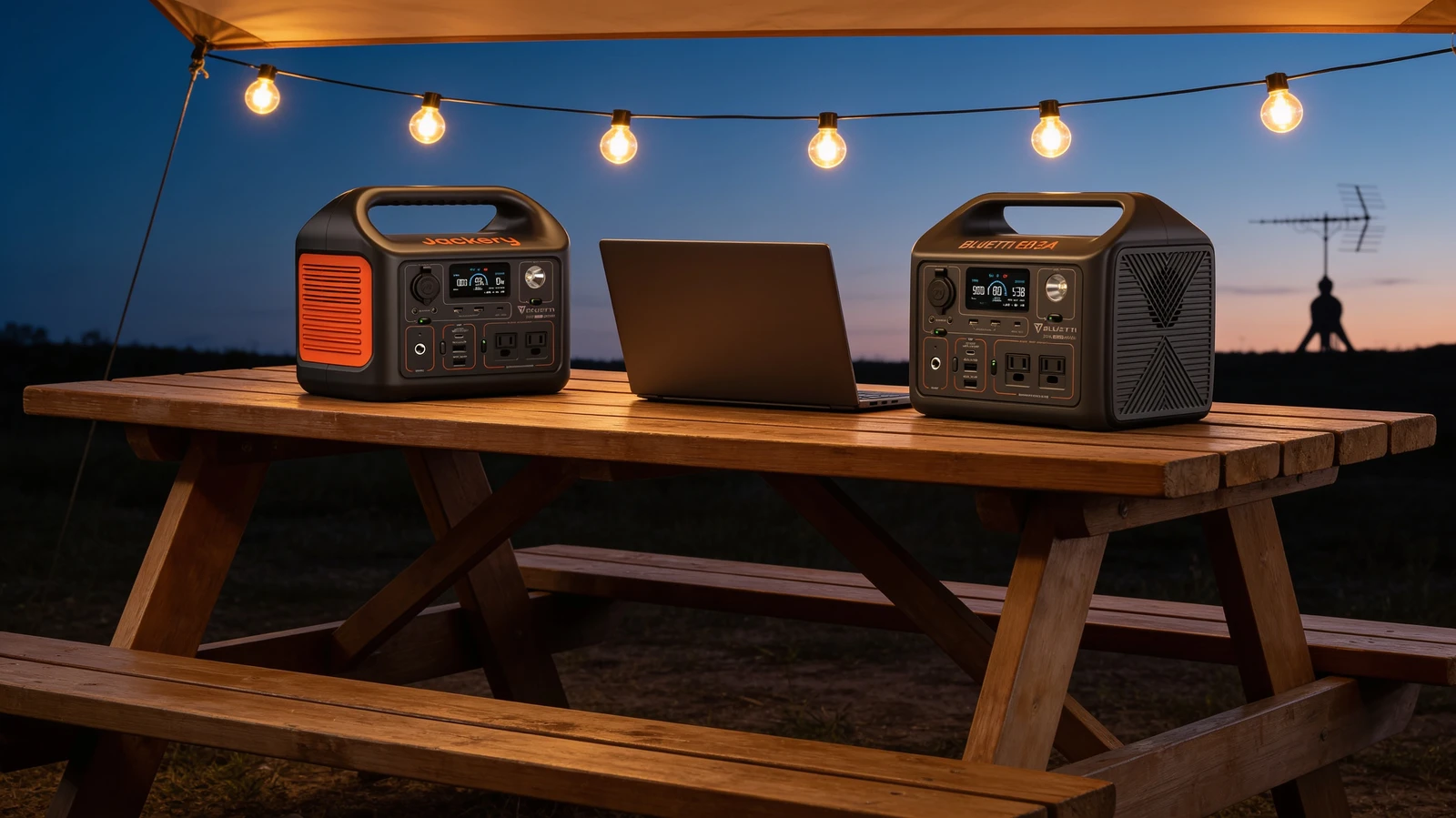
This article contains affiliate links. If you buy through them we may earn a commission at no extra cost to you. Specifications come from the manufacturers’ published listings — we have not bench-tested these units.
Operator’s Verdict: A power station is the best station infrastructure money you’ll spend for Field Day — AC for the laptop, USB for everything, silent, and solar-rechargeable. But know the 12V trap before you buy: the car port on this class is capped around 10A, which runs a QRP radio beautifully and a 100W radio not at all. QRP operators can go power-station-only; 100W operators should pair one with a dedicated LiFePO4 for the radio.
The 12V Trap: Read This Before Buying
The single most common power-station mistake in ham radio is assuming the 12V “car” socket can feed your transceiver. Check the numbers:
- Bluetti EB3A: one car outlet plus two 5.5mm barrels, all regulated 12V/10A per Bluetti’s spec sheet.
- Jackery Explorer 300: one 120W car port per Jackery’s listing — the same 10A at 12V.
Now the radio side, from manufacturer specs: an IC-705 transmits at 3A — no problem. A Yaesu FT-891 at 100W draws up to 23A — more than double what the port can deliver. It will trip the protection on your first real over.
Two subtler catches even for QRP: regulated ports hold 12.0V, not 13.8V, and some radios quietly reduce transmit output below nominal supply voltage (the IC-705 tolerates 13.8V ±15%, so it’s fine). And a car-plug cable is a high-resistance connection — if your radio supports it, a barrel-to-Powerpole cable from the 5.5mm outputs is cleaner than the cigarette plug.
What a Power Station Is Actually For
Think of it as the camp’s utility grid, not the radio’s battery:
- Laptop for FT8 logging — the real battery-killer at digital Field Day stations; a 60W USB-C laptop draws more than your QRP radio.
- Recharging LiFePO4 packs mid-event from AC or solar, so the radio battery never runs dry.
- Lights, phones, hotspot — everything that otherwise nibbles your radio battery.
- Pure sine AC for anything with a wall brick. Both units below advertise pure sine wave inverters; that matters because cheap modified-sine output can put hash on your audio and RF.
The Watt-Hour Math (from published draw specs)
Using the same model as our POTA power budget calculator, at a busy 50% operating cadence and 13V nominal:
| Load | Average draw | Energy per 4h session |
|---|---|---|
| IC-705, SSB | ~0.6 A | ~31 Wh |
| IC-705, FT8 | ~1.7 A | ~86 Wh |
| FT-891 100W, SSB | ~4.1 A | ~213 Wh |
| 60W laptop (typical FT8 logging) | — | ~120–240 Wh |
Read that against a 268–292Wh unit: it will run a QRP digital station plus laptop for a solid session, or about 4 hours of 100W SSB by itself with nothing else plugged in — and every conversion (AC inverter, DC regulation) taxes it further, typically 10–20%. That’s the honest case for the pairing strategy: radio on its own LiFePO4, power station running everything else.
Pro Tip: Size before you buy — the POTA power budget calculator computes your radio’s average draw and the solar wattage that sustains it, and current band conditions will tell you whether Field Day weekend is a QRP weekend. If 10m is open, your whole power problem shrinks by two-thirds.
The Picks
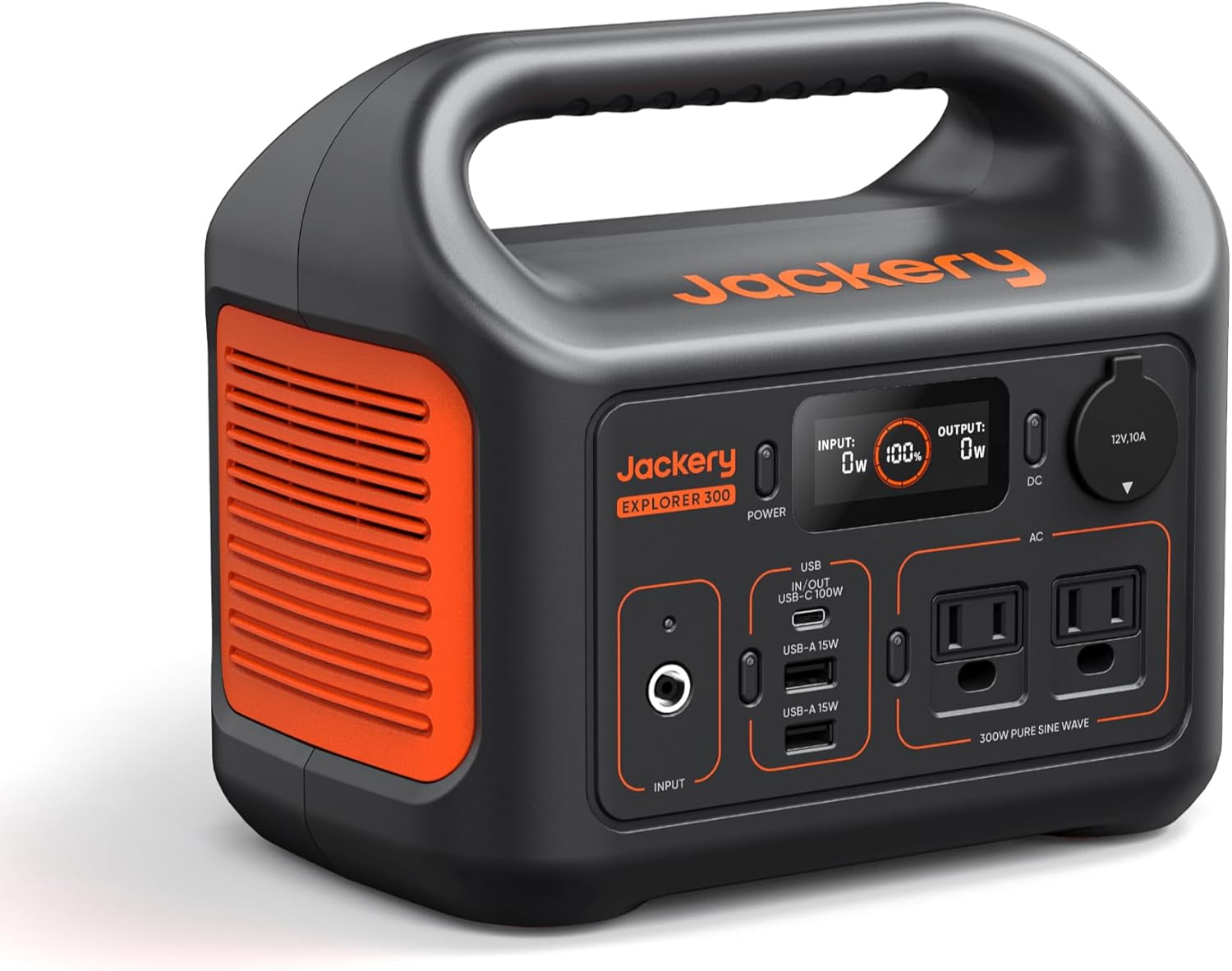
Best all-round starter
Jackery Explorer 300
292Wh at about 7 lb with 2 AC outlets, 100W USB-C, and a 120W car port — the proven entry point, with the largest review base in its class.
- 292 Wh
- Pure sine AC
- 100W USB-C
- 12V/10A car port
Amazon: 4.6/5 from 11,000+ reviews.
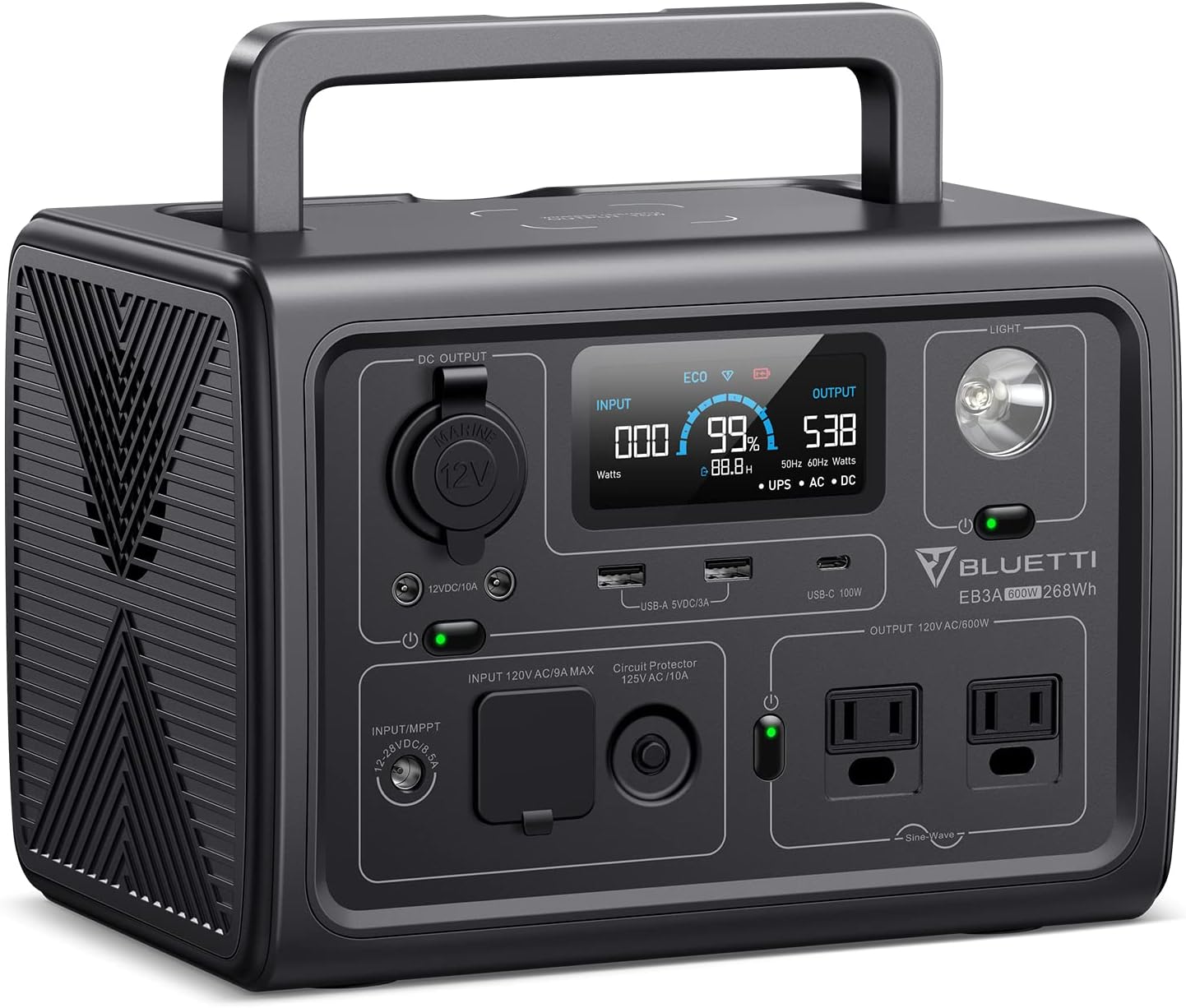
Best DC flexibility
BLUETTI EB3A
268Wh LiFePO4 (2,500+ cycles claimed) with a 600W pure sine inverter and three regulated 12V/10A DC outputs — the barrel jacks wire neatly to Powerpole for QRP rigs.
- 268 Wh LiFePO4
- 600W pure sine
- 3× 12V/10A DC
- 100W USB-C
Amazon: 4.2/5 from 6,000+ reviews. Marked discontinued on Bluetti's own store — remaining retail stock only, so check availability.
Also worth a look: EcoFlow’s River 3 (245Wh LiFePO4, fast AC recharge) competes directly with these two — check current models and pricing. And if you’re powering a 100W station all weekend, this size class is the wrong tool: step up to 1kWh-class units or run the radio from a dedicated 20Ah+ LiFePO4 (see our battery guide).
Frequently Asked Questions
Can I run a ham radio from a power station’s 12V car port?
A QRP radio, yes — the 12V car ports on this class of power station are limited to about 10A (120W), which comfortably covers a 3A radio like the IC-705. A 100W radio drawing 20A+ on transmit will trip the port. Also note most regulated car ports deliver 12.0V, not 13.8V, so some radios produce slightly reduced output.
Do I need pure sine wave output for ham radio?
Yes, if you’ll power anything through the AC outlets — a 13.8V bench supply, laptop bricks, or chargers. Modified sine inverters can cause buzz in audio gear and RF hash. The Jackery Explorer 300 and Bluetti EB3A both advertise pure sine wave AC output on their current listings.
How big a power station do I need for Field Day?
Budget it in watt-hours: a 100W radio at a busy SSB pace averages roughly 4A, about 53Wh per hour at 13V, before inverter or supply losses. A 268–292Wh unit therefore covers roughly 4 hours of 100W SSB — enough for a casual entry, not a 24-hour effort. For all-day 100W operation, look at 1kWh-class units or bring a dedicated LiFePO4 for the radio.
Is a power station better than a LiFePO4 battery for POTA?
For the radio itself, a plain LiFePO4 pack is lighter and cheaper per watt-hour, and it delivers unregulated full battery voltage. The power station earns its place as station infrastructure — recharging your laptop, phone, and battery packs, running lights, and providing AC in camp. Many field operators carry both, each doing what it’s good at.