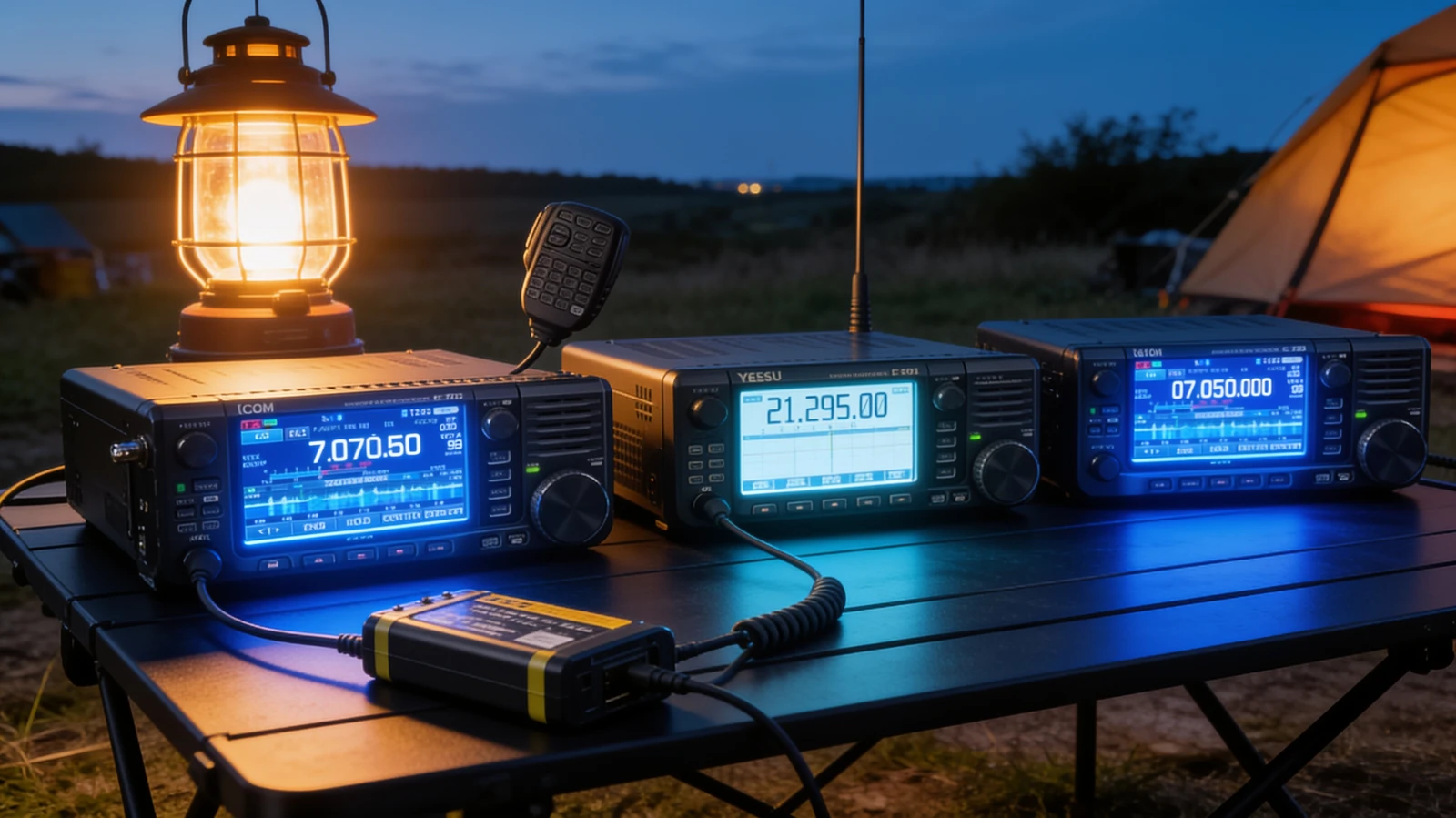
This article contains affiliate links. If you buy through them we may earn a commission at no extra cost to you. Runtime figures below are calculated from each manufacturer’s published current-drain specification — we have not bench-measured these radios, and spec maximums make the estimates conservative.
Operator’s Verdict: The IC-705 and X6100 are 3-amp radios — a light 6Ah pack runs either one all day on SSB. The FT-891 is a different animal: 23A on transmit means a 12Ah pack survives about 3 hours of SSB and under one hour of 100W FT8, and most small packs’ BMS can’t legally deliver its peaks at all. Buy by the radio, not by the battery aisle.
The Numbers These Picks Are Built On
Published current draws, from Icom, Yaesu, and Xiegu specifications:
| Radio | Power | TX max | RX |
|---|---|---|---|
| Icom IC-705 | 10 W | 3.0 A | 0.26–0.32 A |
| Xiegu X6100 | 10 W (ext. supply) | 3.0 A | 0.33 A |
| Yaesu FT-891 | 100 W | 23 A | 2.0 A |
Note the receive column: the FT-891 burns 2 amps just listening — more than six times the QRP radios. Over a long activation, receive draw quietly dominates the budget, which is why the 100W radio needs a disproportionately bigger pack even if you rarely transmit.
Runtime Tables (50% TX cadence — a busy activation)
Average draw = TX-time × mode duty × TX amps + the rest at RX draw, the same model as our POTA power budget calculator. SSB assumes ~20% voice duty; FT8 is full carrier during its TX slots.
IC-705 and X6100 (numbers are within 0.1h of each other)
| Mode | Avg draw | 6 Ah pack | 12 Ah pack |
|---|---|---|---|
| SSB | ~0.6 A | ~10 h | ~20 h |
| FT8 | ~1.7 A | ~3.6 h | ~7.2 h |
FT-891 at 100 W
| Mode | Avg draw | 12 Ah pack | 20 Ah pack |
|---|---|---|---|
| SSB | ~4.1 A | ~2.9 h | ~4.9 h |
| FT8 | ~12.5 A | ⚠️ under 1 h — and over most small-pack BMS ratings | ~1.6 h |
Two honest caveats: these use spec-maximum transmit currents, so real-world numbers usually run longer; and LiFePO4 delivers close to its full rated Ah, but if you use an SLA battery, halve every runtime (50% depth-of-discharge limit).
Pro Tip: Your exact setup — different TX cadence, CW, reduced power, a different pack — takes ten seconds in the POTA power budget calculator. It uses these same published specs and adds the required-Ah margin math, plus a live check of today’s band conditions to tell you when QRP will do.
Picks by Radio
IC-705: buy the lightest thing that works
At 3A peak draw, the IC-705 cannot stress any modern pack — so optimize weight. The Talentcell 6Ah lithium-ion pack weighs about 1.5 lb, costs a third of a LiFePO4, and covers a full SSB day. Its trade-offs: lithium-ion chemistry means fewer cycles than LiFePO4 and a slightly different voltage curve. If you want the pack to outlive the radio, the Bioenno 12Ah is the buy-once choice with capacity to spare for FT8 marathons.
X6100: same math, one wrinkle
The X6100’s external draw profile mirrors the IC-705 almost exactly, so the same packs apply. The wrinkle is its internal battery: fine for casual reduced-power operating, but full 10W output wants the external supply — so treat the external pack as mandatory kit for a real activation, not an accessory.
FT-891: respect the 23 amps
This is where battery shopping gets serious. Three rules from the table above: (1) the pack’s BMS continuous rating must comfortably exceed 23A — most 10–12Ah packs are rated 10–20A and will cut out mid-over (see our Bioenno vs Dakota vs LiTime comparison for exact BMS limits); (2) 15Ah is the sensible floor for a few hours of SSB, 20Ah+ for a full day; (3) for FT8, drop the power — 30–50W costs you almost nothing on a digital mode and roughly doubles your runtime. When comparing larger packs, check the listed BMS continuous current before capacity; capacity is easy, current is what trips.
Where to Buy
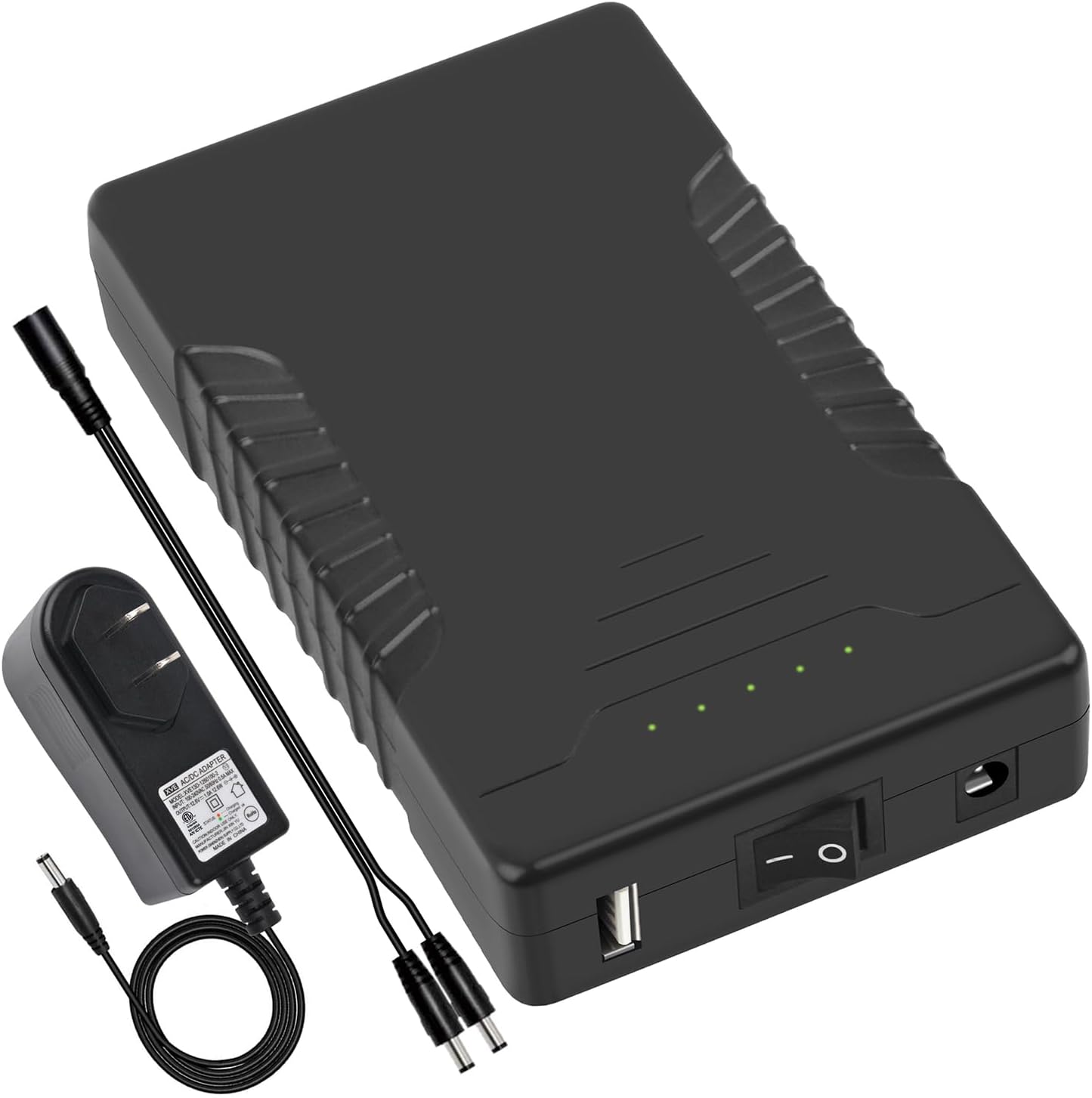
IC-705 / X6100 day pack
Talentcell 12V 6Ah
Featherweight lithium-ion — a full QRP SSB day at ~1.5 lb.
- 6 Ah
- Li-ion
- ~1.5 lb
Amazon: 4.7/5 from 4,600 reviews. QRP radios only.
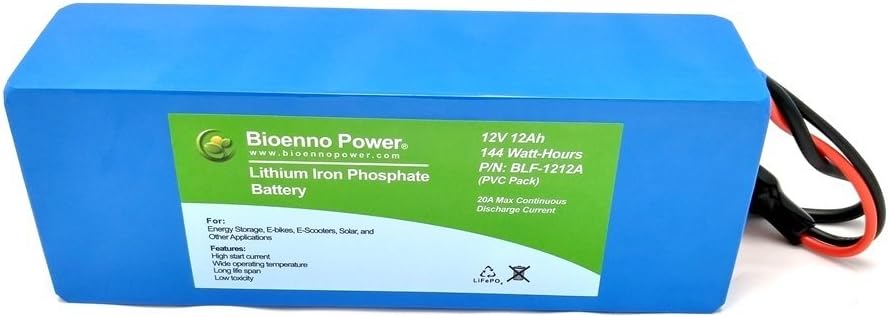
Buy-once QRP / digital
Bioenno BLF-1212A 12Ah
LiFePO4 with a 20A BMS — FT8 marathons on a QRP rig, moderate-power SSB too.
- 12 Ah
- 20 A BMS
- 3.3 lb
Amazon: 4.6/5 from 48 reviews.
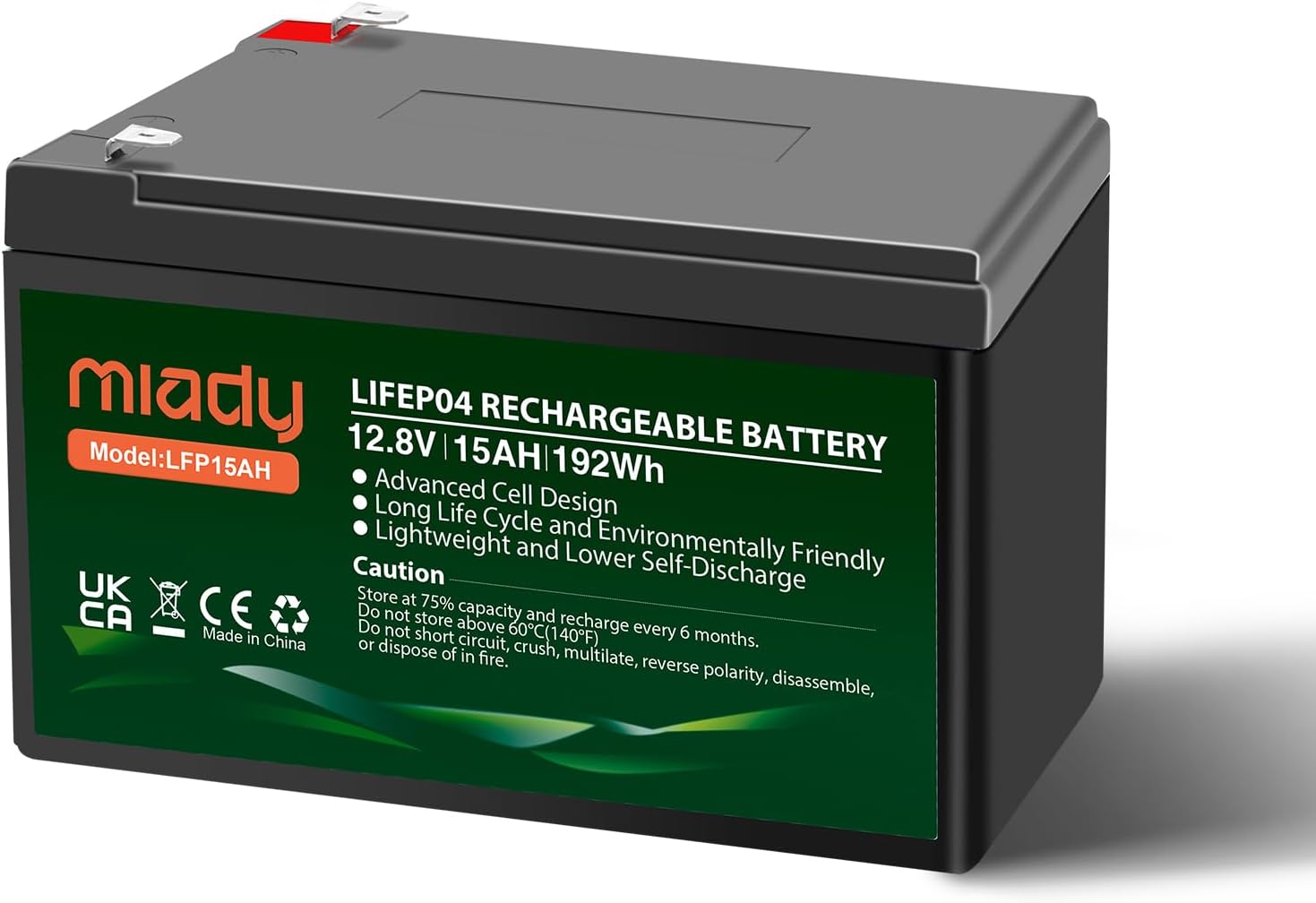
FT-891 capacity floor
Miady 12V 15Ah LiFePO4
Budget capacity for 100W SSB sessions — verify the listing's BMS continuous rating against your radio's 23A peak before relying on it at full power.
- 15 Ah
- LiFePO4
- Budget price
Amazon: 4.7/5 from 48 reviews. Or step up: 20Ah+ packs with high-current BMS.
Frequently Asked Questions
What battery should I buy for an Icom IC-705?
The IC-705 draws at most 3A on transmit at 13.8V per Icom’s spec, so almost any 12V LiFePO4 or lithium pack works. A 6Ah pack covers roughly 10 hours of SSB or 3.5 hours of FT8 at a 50% operating cadence; a 12Ah pack doubles that. Weight is the real criterion — a 1.5 lb Talentcell-class pack is plenty.
How long will a Yaesu FT-891 run on a 12Ah battery?
At 100W SSB with a 50% transmit cadence the FT-891 averages about 4.1A (23A peak per Yaesu’s spec), so a 12Ah LiFePO4 gives roughly 3 hours of hard operating. On FT8 at 100W the average jumps to about 12.5A and the same pack lasts under an hour — reduce power or bring 20Ah+.
Can the FT-891 run FT8 at 100W from a small battery?
Practically, no. FT8 at 100W averages about 12.5A with 23A key-down draw — that exceeds the BMS continuous rating of most 10–12Ah packs, which will cut out mid-transmission. Either drop to 30–50W (FT8 rarely needs more) or use a 20Ah+ pack whose BMS is rated at 25A continuous or better.
Does the Xiegu X6100 need an external battery?
The X6100 has an internal battery for reduced-power operation, but full 10W output requires an external 12V supply per Xiegu’s spec. Its external draw profile is nearly identical to the IC-705 (about 3A TX max, 0.33A RX), so the same 6–12Ah packs and runtime numbers apply.