This article contains affiliate links. If you buy through them we may earn a commission at no extra cost to you. Prices and ratings come from Amazon and change constantly.
Six meters is the band that turns patient operators into fanatics. Most days it’s quiet and local; then sporadic-E lights it up and suddenly you’re working across a continent with 100 watts. To be ready when the magic happens you need two things: a radio that covers 6m and an antenna to catch the opening. Here’s the honest short list, plus how to know when to point your beam.
Quick Picks
| Need | Gear | ~Price | Why |
|---|---|---|---|
| 🥇 Best 6m-capable radio | Icom IC-7300 | ~$1,200 | 100W HF/6m with a scope to spot openings |
| 🚗 Best budget 6m antenna | Shark S-F6 | ~$50 | Simple mobile 6m vertical |
| 📡 Best 6m DX antenna | 6m Yagi beam | varies | A small beam transforms 6m DX |
🥇 Best 6m-Capable Radio
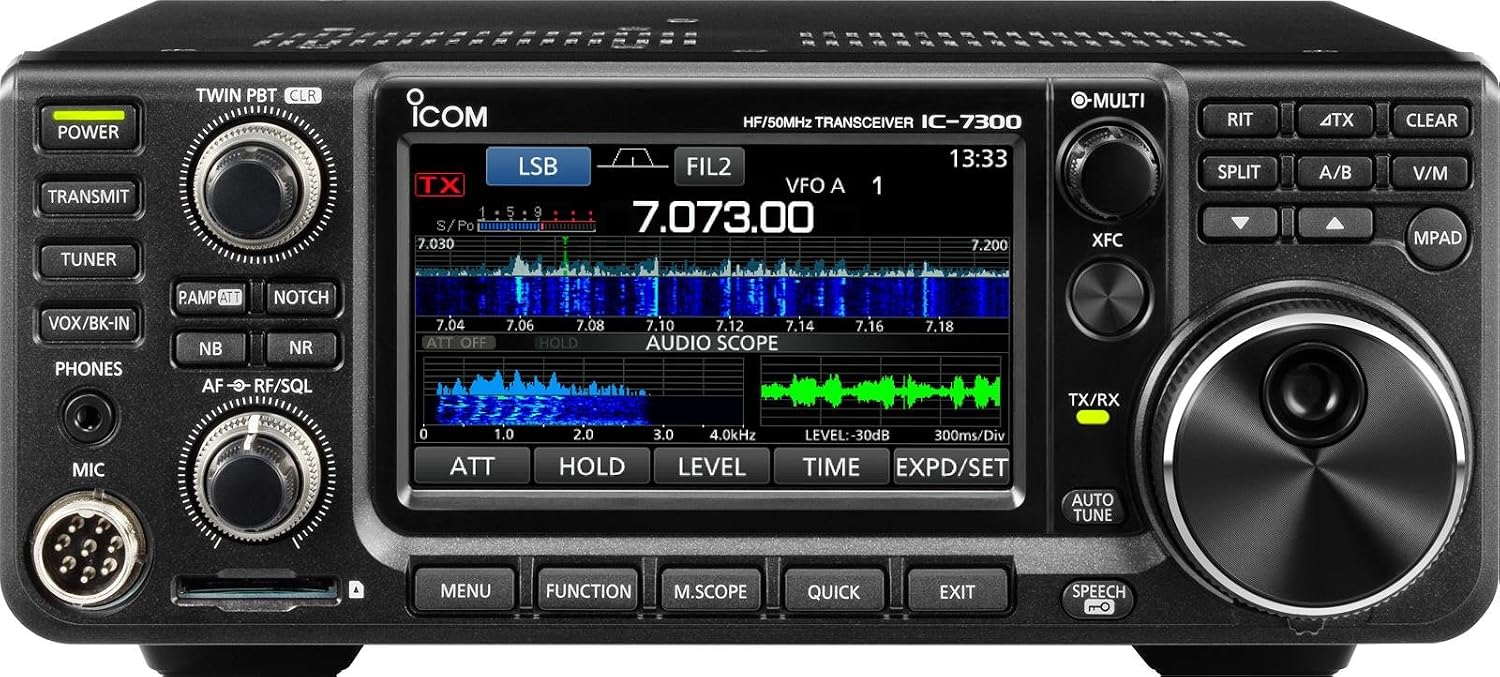
Icom IC-7300
You don't need a 6m-only radio — the IC-7300 does 100W on HF and 6m, and its waterfall scope is perfect for spotting the moment 6m springs to life. Watch the band go from empty to full of signals in real time.
- 100W HF + 6m
- Spectrum scope
- Catches openings
The FT-710, FT-891, and FT-991A also cover 6m — see our radio guide.
🚗 Best Budget 6m Antenna
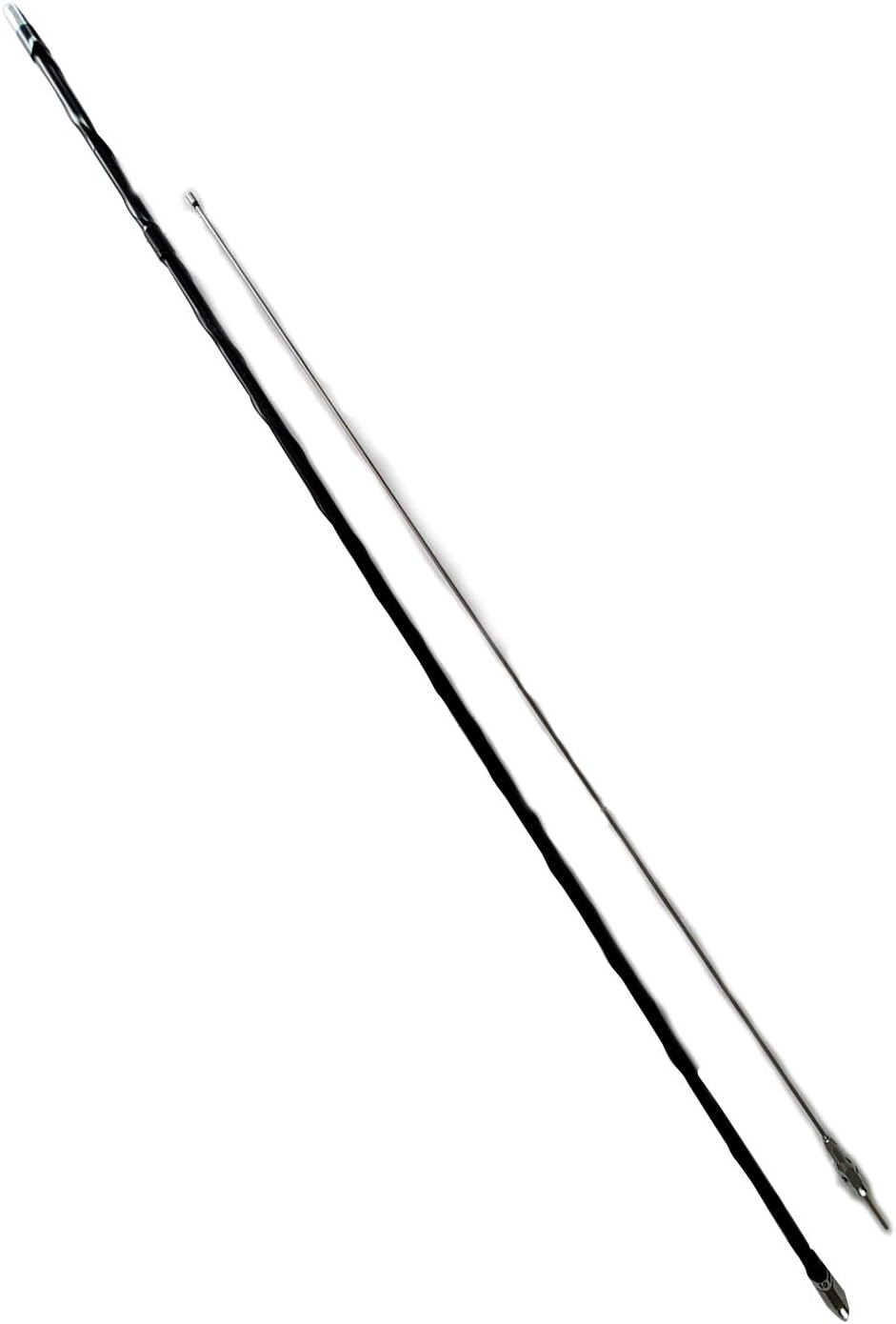
Shark S-F6 6m Vertical
A simple, inexpensive 6m mobile whip that handles 250W and gets you monitoring the band from a vehicle or a small ground plane. Omnidirectional, so it catches sporadic-E openings from any direction without aiming.
- 6m mono-band
- 250W
- 3/8x24 mount
Amazon: 4.2/5 from 25 reviews. Great for catching openings; add a Yagi for serious DX.
The DX secret: a small Yagi
When 6m opens, a directional Yagi beam is transformational — even a compact 2- or 3-element Yagi can turn a weak sporadic-E signal into an armchair contact, and lets you work multiple directions as the opening moves. The best 6m Yagis typically come from ham-specialist antenna makers rather than big retailers, so budget a little sourcing time if you catch the 6m bug. Start with a vertical to monitor, then add a beam once you’re hooked.
How to catch the magic
Six meters rewards the operator who’s watching when it opens. Two habits help:
- Monitor the band. Leave your radio on 6m during the sporadic-E season — late spring through summer — and watch the scope or a live map.
- Use our tools. Our sporadic-E tracker and is 6m open pages tell you when the band is alive, and the magic band guide explains the propagation modes behind it.
When an opening hits, work fast and log everything — 6m openings can vanish as quickly as they appear, as the 6m DX records show.
Who should skip these
If you never operate in the summer sporadic-E season or don’t have a 6m-capable radio, the magic band may not be worth chasing yet — focus on the HF bands first. And if you already own an HF/6m radio like the IC-7300 or FT-891, you don’t need to buy another radio; just add a 6m antenna and start listening.
Frequently Asked Questions
What radio do I need for 6 meters?
Almost any modern HF radio also covers 6m at 100W — the Icom IC-7300, Yaesu FT-710, FT-891, and FT-991A all include the 6m band. The IC-7300 is a favorite for 6m because its spectrum scope makes spotting a sudden sporadic-E opening effortless. You don’t need a dedicated 6m radio; a good HF/6m transceiver is the practical choice.
What is the best antenna for 6 meters?
For serious 6m DX, a directional Yagi beam is the gold standard — even a small 2- or 3-element Yagi dramatically outperforms a vertical when an opening appears. For casual or mobile 6m work, a simple 6m vertical whip like the Shark S-F6 gets you on the band cheaply. Start with a vertical to catch openings, then add a Yagi when you’re hooked on the magic band.
Why is 6 meters called the magic band?
Because its propagation is dramatic and unpredictable. Most of the time 6m is quiet and local, then sporadic-E, aurora, or F2 propagation suddenly opens it for hours, turning a dead band into worldwide DX with modest power. That feast-or-famine, catch-it-while-it’s-open nature is what earns 6m the “magic band” nickname — and why watching for openings is half the fun.
When does 6 meters open for DX?
The prime season is late spring and summer — roughly May through August in the Northern Hemisphere — when sporadic-E ionization peaks and opens 6m for regional and continental DX almost daily. Around solar maximum, F2 propagation can also open 6m for true worldwide contacts. Aurora and meteor scatter add openings year-round. Watching a live 6m map or spectrum scope is the way to catch them.
Can I work 6 meters with a vertical antenna?
Yes. A 6m vertical won’t match a Yagi for DX, but it’s omnidirectional, cheap, and always ready — perfect for catching sporadic-E openings that appear without warning from any direction. Many operators run a simple vertical to monitor the band and switch to a beam once an opening is confirmed. A mobile 6m whip is also a great low-cost way to get on the band from a vehicle.